Trisha Brown
 USA
USA- Trisha Brown Biography
- Early Career
- Exploring Movement
- Collaborations and Notable Works
- Later Career and Recognition
Trisha Brown Biography
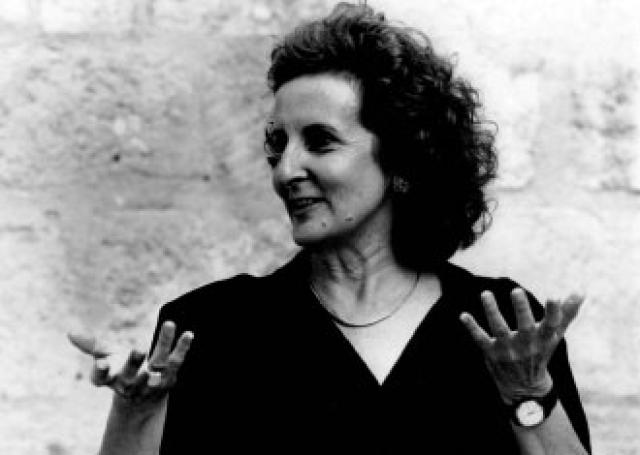
Trisha Brown was an American dancer and choreographer who is recognized as one of the leading figures in contemporary dance. Born on November 25, 1936, in Aberdeen, Washington, Brown began her career in the 1960s as a member of the Judson Dance Theater, a group of postmodern dancers and choreographers including Yvonne Rainer and Steve Paxton.
Early Career
Brown first gained attention for her innovative works showcased at the Judson Dance Theater. Alongside like-minded artists such as Steve Paxton and Yvonne Rainer, Brown challenged traditional dance conventions, leading to a new era of contemporary dance. In 1970, she co-founded the experimental ballet group "Grand Union" with Paxton and established her own company, "Trisha Brown Dance Company", which soon became one of the leading ensembles in contemporary dance.
Exploring Movement
Throughout her career, Brown continually pushed the boundaries of movement and choreography. She created early dances in alternative spaces, such as rooftops and walls, often playing with gravity and defying its rules. Her iconic work "Man Walking Down the Side of a Building" paved the way for her own innovation in the staging of Monteverdi's "Orfeo" in 1998, as well as inspiring many choreographers and theater directors in their exploration of unexpected aspects of human body movement.
Collaborations and Notable Works
In 1983, Brown collaborated with artist Robert Rauschenberg and composer Laurie Anderson on "Set and Reset," a groundbreaking work that showcased fluid and unpredictable geometric styles, a hallmark of her compositions. She continued to create dance cycles exploring complex movements in multiple directions. Brown's collaboration with artist Terry Winters and composer Dave Douglas resulted in a dance trilogy based on the structure and sound of contemporary jazz music, culminating in the completion of the "Trilogy" in 2000, which set a new direction for dance in the new millennium.
Later Career and Recognition
In 2001, Brown turned her attention to directing opera, creating a new staging of Salvatore Sciarrino's "Luci Mie Traditrici." She also directed "Winterreise," a collaboration with baritone Simon Keenlyside and three dancers, premiered in December 2002 at Lincoln Center's "New Visions" series. Brown's enigmatic work, "Geometry of Quiet," was also presented in December 2002. In December 2003, she premiered "Present Tense" at the Cannes Film Festival, one of her last creations.
Trisha Brown was the first female choreographer to receive the MacArthur Fellowship. She received numerous prestigious awards, including the Dance Magazine Award, two John Simon Guggenheim Memorial Foundation fellowships, and the National Medal of Arts in 2003. In 1998, she was named a Knight of the Order of Arts and Letters by the French government, and later received the Officer and Commander titles in 2000 and 2004, respectively. Brown's works, such as "Set and Reset," are included in the curriculum for French dance students pursuing a bachelor's degree. She was also honored with honorary doctorates and became an Honorary Fellow of the American Academy of Arts and Letters.