
Tuviah Friedman
 Israel
- Biography of Tuvia Friedman
- Early Life
- Escape and Pursuit of Justice
- Hunting Down Nazi War Criminals
- Later Life and Legacy
Biography of Tuvia Friedman
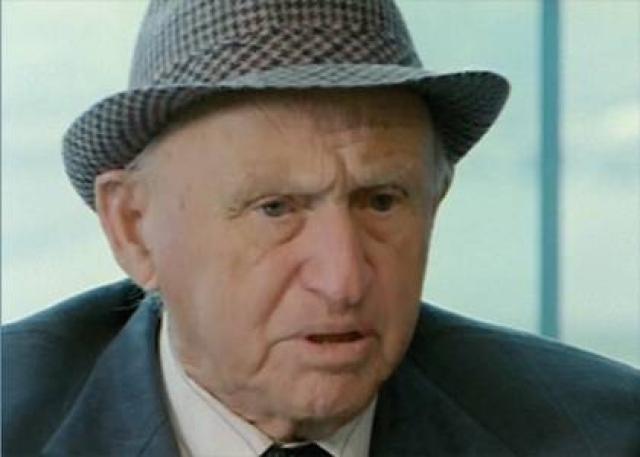
Tuvia Friedman was an Israeli historian and public figure, renowned for his work in hunting down Nazi war criminals involved in the mass extermination of European Jews during World War II.
Early Life
Tuvia Friedman was born on January 23, 1922, in Radom, Poland, to Sara and Yakov Friedman, who were devout Jews. He grew up in a wealthy Jewish family, with three siblings: younger brother and sister, Gershon and Itka, and older sister, Bella. However, their peaceful childhood was abruptly disrupted when German forces entered Poland in 1939, and all Jews were sent to forced labor. Tuvia managed to escape and reunite with his family, but they soon faced further hardships, including constant humiliations, pogroms, and relocation to closed ghettos. In 1941, Tuvia's father died from starvation, and his mother and younger sister were later transferred to death camps. His younger brother went missing and is believed to have perished in a gas chamber in one of the nearby concentration camps.
Escape and Pursuit of Justice
By a stroke of luck, Tuvia and his sister narrowly avoided execution when they believed a German soldier's joke about allowing Jews to go to Palestine and recorded their names on a list with 150 others. Most of those on the list were executed on the same day. In 1944, Tuvia managed to escape the camp and, posing as a Polish escapee, waited in the forests for the liberation of Poland by the Red Army. After the liberation, he joined the Polish militia under a false name and began interrogating captured Nazis. Over the years, he became one of the most experienced investigators in the country.
Hunting Down Nazi War Criminals
Miraculously, Tuvia reunited with his older sister, who was also hiding under a false identity, and together they decided to move to Palestine. As Tuvia delved deeper into investigating Nazi crimes, he discovered that out of Radom's 35,000-strong Jewish community, only 700 survived. Alongside other investigators, Tuvia stumbled upon various pieces of evidence, such as a house filled with dozens of dead bodies and a barrel in a neighboring building where Germans had attempted to make soap from human fat. While en route to Palestine, Tuvia found himself in Vienna, Austria, where he met a group of Jews dedicated to locating and capturing German officers. In just a few days, Tuvia found one of the guards from the Radom ghetto and handed him over for trial. His main goal became the capture of Adolf Eichmann, the mastermind behind the persecution of Jews and the architect of the "Final Solution."
Later Life and Legacy
For the following years, Tuvia worked in Haifa, Israel, investigating German crimes and intensifying his search for his main enemy. It took nearly ten years for the case to progress. After an article about Eichmann's crimes, someone reported that he was in Kuwait. However, a German Jew in Argentina claimed that Eichmann was likely living under a false name in Argentina. Gathering additional information, Tuvia handed over all the materials to Mossad. Within a few weeks, a plan to capture the criminal was devised and executed on May 11, 1960. Eichmann was transported to Israel and, after a trial and his personal confession, executed. Tuvia's capture of the criminal was widely covered in the Israeli newspapers, with his photograph featured alongside the caption, "Tuvia Friedman - the man who dedicated his life to capturing Eichmann."
On January 13, 2011, Tuvia Friedman passed away at his home in Haifa. Throughout his life, he successfully captured over 200 Nazi war criminals, while also making a significant contribution to the development of the Jewish national idea, founded on mutual respect and unity against external enemies. Today, there are two films dedicated to Friedman's work, and he is remembered as the most famous and successful Nazi hunter in history.



