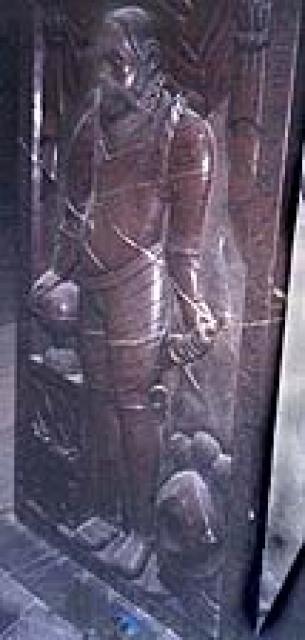
Tyge Brahe
 Denmark
- Biography of Tycho Brahe
- The Start of a Passion
- Astronomer, Astrologer, and Alchemist
- The Uraniborg and Stjerneborg
- The Pursuit of Accuracy
- The Legacy
Biography of Tycho Brahe
Tycho Brahe, a Danish astronomer, astrologer, and alchemist of the Renaissance period, was born on February 26, 1546, into a noble family. At the age of 13, he enrolled in the University of Copenhagen, where he studied rhetoric and philosophy. Although his social status destined him for a political career, his fascination with the heavens led him towards a different path.
The Start of a Passion
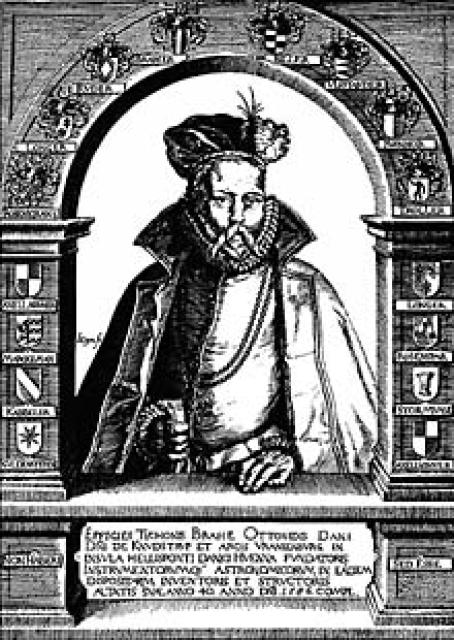
One evening in November 1572, a bright star appeared in the Danish sky, rivaling the brilliance of Venus. Tycho Brahe, with his silver nose, was captivated by this celestial phenomenon. Despite his initial reluctance to write books, he later published "De nova... Stella" ("On the New Star"), which documented his observations and thoughts on the new star. This astronomical lover would spend the next 29 years studying the heavens, leaving behind a legacy that would endure.
Astronomer, Astrologer, and Alchemist
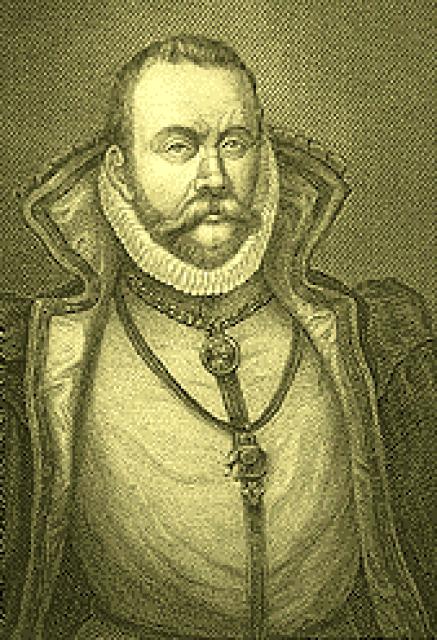
During the late 16th century, Tycho Brahe's pursuit of astronomy and astrology clashed with societal expectations and religious views. While many respected his scientific endeavors, others feared his knowledge and associated him with superstitions. Undeterred by societal prejudices, Tycho Brahe embraced his role as an astronomer and pursued his studies in astrology and alchemy as well. He traveled across Europe, visiting renowned centers of astronomy and astrology, such as Wittenberg, Rostock, Basel, Ingolstadt, and Augsburg.
The Uraniborg and Stjerneborg
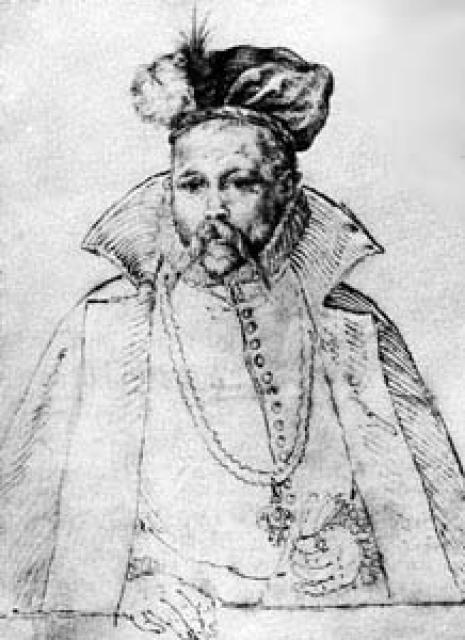
In 1576, Tycho Brahe found favor with King Frederick II of Denmark, who provided him with resources to establish an astronomical research facility. Tycho Brahe constructed the Uraniborg, a grand observatory and castle on the island of Ven. The Uraniborg featured observatories with rotating roofs, a library with a famous large celestial globe, and a chemical laboratory. Later, he built the Stjerneborg, which housed underground observatories and workshops for instrument-making.
The Pursuit of Accuracy
Tycho Brahe's most significant contribution to astronomy was his unwavering commitment to precision in his observations. He recognized the importance of accurate instruments and meticulous methods for gathering data. Tycho Brahe's "great mural quadrant" revolutionized the measurement of angular distances in the sky and became a masterpiece of both science and art. Despite his achievements, many of his instruments were destroyed after his death.
The Legacy
Tycho Brahe's work laid the foundation for future advancements in astronomy. Although he died in 1601, his observations and calculations were instrumental in Johannes Kepler's development of his laws of planetary motion. Tycho Brahe's dedication to accuracy and his contributions to the field of astronomy have made him an enduring figure in the history of science.


