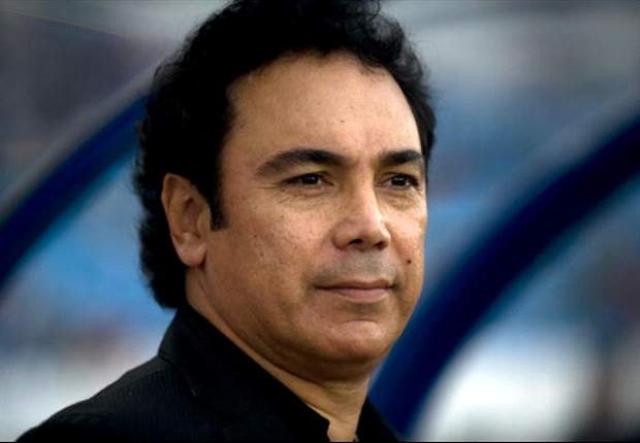
Ugo Sanchez
 Mexico
Biography of Hugo Sanchez
Hugo Sanchez, a Mexican football player, was known for his extraordinary skills as a forward. He was incredibly light and could effortlessly perform acrobatic tricks, scoring goals from the most unimaginable positions. In addition, his game was characterized by intelligence, brilliant technique, and incredible agility. Despite his short stature, Sanchez could jump to extraordinary heights, making his style unique. Unlike many other players, he gave the impression that football was not just a job for him but a hobby. He dedicated significant attention to his studies and saw football as a source of pleasure.
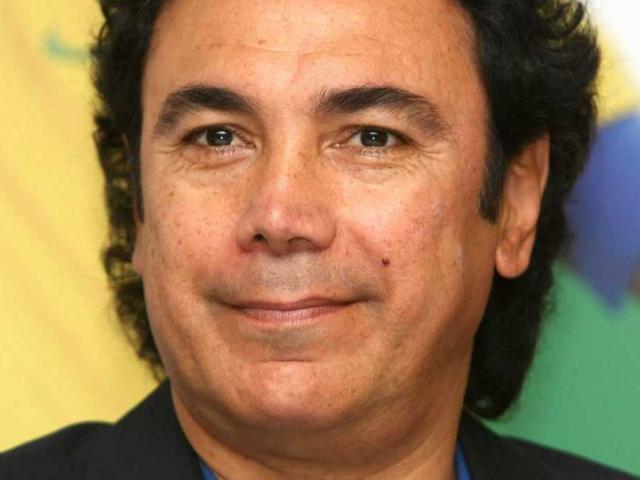
Hugo Sanchez was born as the fourth child of a large family in Mexico. His parents, Hector Sanchez and Isabel Marques, belonged to the middle class. The family had a strong sports background. Isabel pursued volleyball, while Hector played football and was considered a backup player for the Mexican superstar of that time, Horacio Casarin. As the earnings of football players were not sufficient to support such a large family, Hector had to combine football with another job. Sports were the number one priority for this family, and it is not surprising that all six children (Hector, Horacio, Ilda, Hugo, Erlinda, and Ayde) achieved success in various sports. Ilda, under her mother's influence, pursued volleyball and even married her coach. Erlinda became a Mexican gymnastics champion and represented her country at the Olympic Games in Montreal. Currently, she and her husband own two gymnastics schools. All three sons followed in their father's footsteps. Hector, the oldest son, played as a midfielder for UNAM from 1973 to 1978, after which he became a manager and currently works in a well-known football school in Tijuana, Mexico. The second son, Horacio, defended the goal for UNAM and Puebla and played for the Mexican national team in the 1972 Olympics.
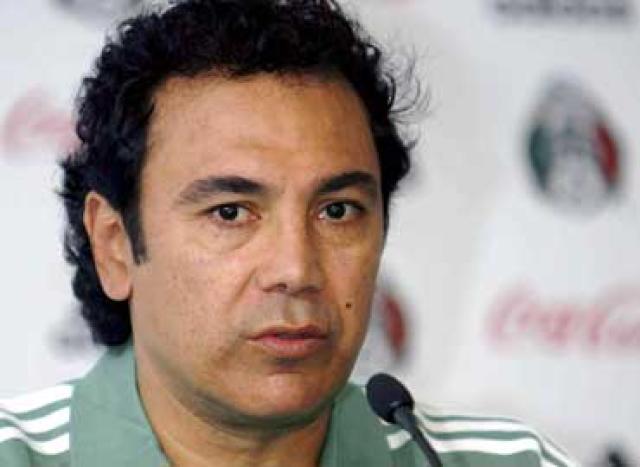
To find the most talented players scattered across different schools, officials decided to reorganize football and focus on talent scouting after Mexico's relative disappointment in the 1968 Olympics held in Mexico. Among others, two Sanchez brothers, Horacio and Hugo, emerged from this process. Hugo joined the youth academy of UNAM, organized in the 1960s by the Argentine star Renato Cesarini. In April 1974, 15-year-old Hugo Sanchez played at the traditional youth tournament in Cannes, after which he was included in the Mexican youth national team as a left forward. This team achieved remarkable success in less than two years, winning the CONCACAF Championship (1974), another tournament in Cannes (1975), and the Pan American Games (1975). The team remained unbeaten in 19 consecutive matches. However, Hugo did not participate in the final tournament due to becoming a professional player for UNAM and starting his studies in dentistry.
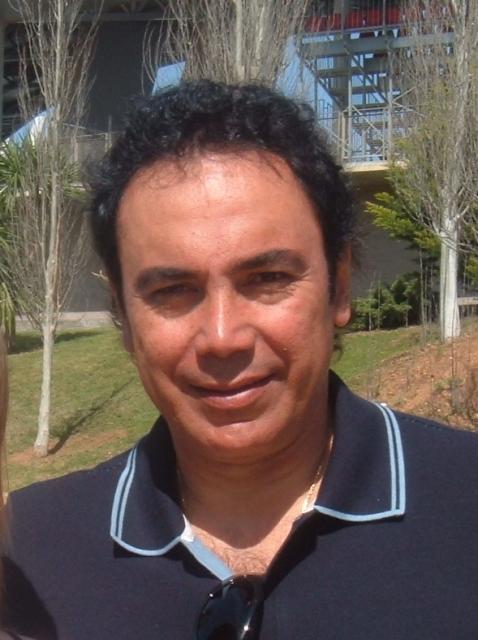
Sanchez's career in UNAM was challenging at first, as he had to compete with a strong lineup of players. However, he managed to establish himself as a regular player in the 1977/78 season and became the top scorer in the league alongside his teammate Cabinho a year later. In the summer of 1978, 19-year-old Sanchez joined Atletico Madrid in Spain. His transfer, initiated by the club's president, caused surprise and doubt in the Spanish press. Being the first Mexican player in the Spanish league in many decades, he had to prove himself in a challenging environment. With determination and hard work, Sanchez gradually became a key player for Atletico Madrid and gained popularity among fans.
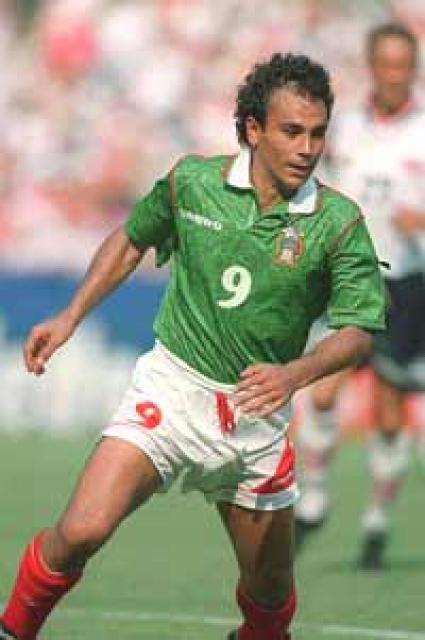
In 1981, after winning another championship title with Atletico Madrid and obtaining a dentistry diploma, Sanchez moved to Real Madrid. In his five seasons at Real Madrid, he scored 150 goals in the league, averaging 30 goals per season. He became a legendary player and won the "Pichichi" title as the league's top scorer in 1985. Sanchez's peak year was the 1989/90 season, during which he scored 38 goals and won the European Golden Boot alongside Hristo Stoichkov. His talent and style of play were admired throughout Europe. However, he faced criticism and a lack of recognition in Mexico due to the national team's failures in international competitions. Sanchez participated in three World Cups but could not replicate his club success with the national team.
After leaving Real Madrid in 1992, Sanchez returned to Mexico for a farewell season with Club America. However, his relationship with the coach, Brazilian Falcao, was not favorable, and the Mexican press continuously attacked him, mainly because of the disappointing performance of the Mexican national team in the 1986 World Cup. Fueled by anger, Sanchez extended his career and played for several clubs, including Rayo Vallecano in Spain, Atlante, and America in Mexico, Linz in Austria, and Dallas Burn in the United States. He eventually retired from professional football in 1997.
Since retirement, Sanchez has faced challenges in his coaching career. He had a short stint as the coach of UNAM but was dismissed due to the team's poor performance. Sanchez has also worked as a television commentator, but his sharp and critical comments resulted in his removal from the booth. Despite his controversies, Sanchez remains a legendary figure in Mexican and international football.