Ulius Mayer
 Germany
- Early Life and Education
- Overseas Voyage and Pioneer Observations
- Formulating the Principle of Energy Conservation
- The Mechanical Equivalent of Heat
- Implications for Living Organisms and Recognition
- Legacy and Impact
Early Life and Education
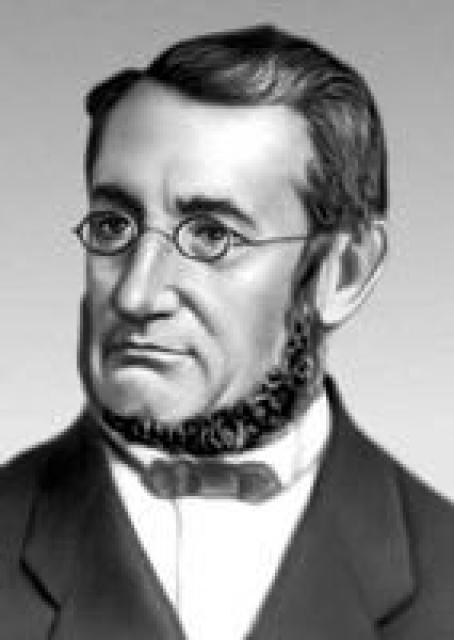
Julius Robert Mayer, a German physician and physicist, was born in Heilbronn on November 25, 1814. The son of an apothecary, Mayer studied at the medical faculty of the University of Tübingen, graduating in 1838.
Overseas Voyage and Pioneer Observations
In 1839, Mayer worked in Parisian clinics before embarking on a voyage as a ship's doctor to Batavia (present-day Jakarta) in 1840-41. During his time in the tropics, he observed a change in the color of venous blood in his patients. These observations led him to postulate a connection between food consumption and heat production in living organisms.
Formulating the Principle of Energy Conservation
In 1841, Mayer submitted his first scientific article, "On the Quantitative and Qualitative Determination of Forces," to Johann Christian Poggendorff, the publisher of the journal "Annalen der Physik." The article, though not published, contained ideas similar to the law of energy conservation. Mayer further developed his views in "Remarks on the Forces of Inanimate Nature" (1842).
The Mechanical Equivalent of Heat
In his groundbreaking work "Organic Motion in Its Connection with Metabolism" (1845), Mayer explicitly formulated the law of energy conservation and theoretically calculated the numerical value of the mechanical equivalent of heat. Mayer believed that different physical phenomena, such as motion, heat, and electricity, were interchangeable "forces" (a term he used for energy) that could transform into each other in equivalent proportions.
Implications for Living Organisms and Recognition
Mayer extended his law to biological processes, proposing that plants absorb and store solar energy while other organisms simply transform substances and "forces" without creating new ones. Mayer's revolutionary ideas were not immediately recognized by his contemporaries. Additionally, a dispute over the priority of discovering the law of energy conservation led to Mayer's withdrawal from the scientific community and an attempted suicide in 1850.
Legacy and Impact
Hermann von Helmholtz, a prominent German physiologist, was the first to fully appreciate Mayer's pioneering work. Mayer's contributions are now widely acknowledged, solidifying his place as one of the founders of thermodynamics and the principle of energy conservation.