Valentin Makarov
 Ukraine
- Biography of Valentin Makarov
- Early Career and First Victories
- Bravery at Stalingrad and Kursk
- Final Days of the War
- Post-War Career and Retirement
Biography of Valentin Makarov
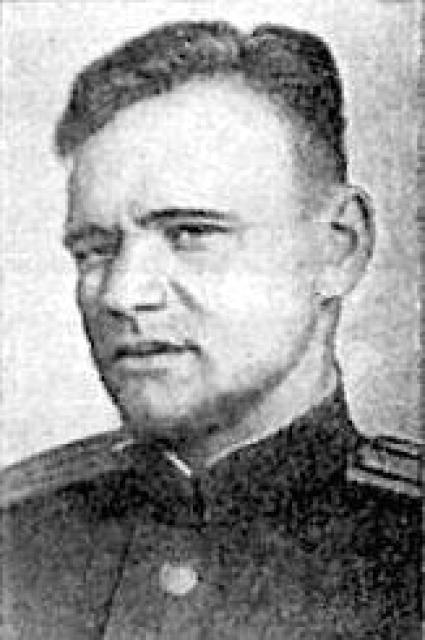
Valentin Nikolaevich Makarov, a fighter pilot, was born on August 30, 1919, in Sevastopol, in a working-class family. He completed 7 grades of school and the Simferopol Aero Club. Makarov joined the Red Army in 1937 and graduated from the Kachinskaya Military Pilot School in 1939. He served on the front lines of the Great Patriotic War from the very beginning.
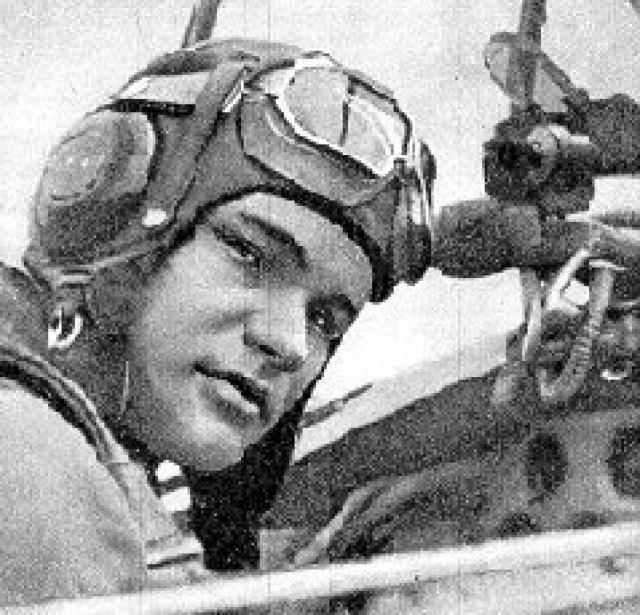
By January 1943, Captain V.N. Makarov had completed 462 combat flights and shot down 15 enemy aircraft individually and 7 in a group during 118 aerial battles. On January 28, 1943, he was awarded the title of Hero of the Soviet Union for his courage and military valor displayed in battle. By the end of the war, Makarov had completed 635 successful combat flights, engaged in 150 aerial battles, and personally destroyed 30 enemy aircraft and 9 in a group with his comrades.
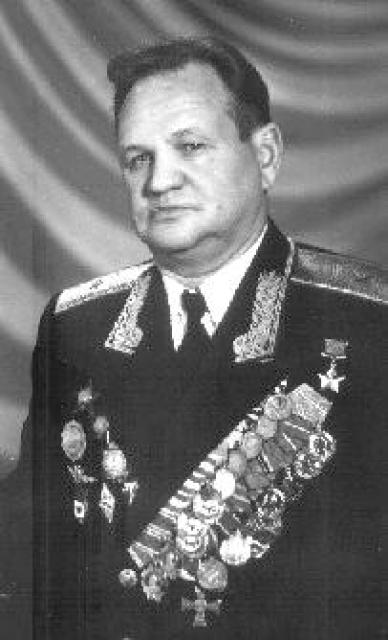
After the war, Makarov continued to serve in the Air Force. In 1956, he graduated from the General Staff Military Academy. Makarov retired as a Major General of Aviation in 1975. He was awarded the Orders of Lenin (twice), Red Banner (three times), Alexander Nevsky, the Patriotic War of the 1st degree, the Red Star (twice), and the "For Service to the Motherland in the Armed Forces of the USSR" of the 3rd degree, as well as several medals. Makarov passed away on May 20, 1978, and was buried in Minsk.
Early Career and First Victories
Valentin Makarov began his service in aviation at the age of 18 and entered the Great Patriotic War as the commander of a fighter squadron. From the very beginning, he proved himself to be a skilled fighter pilot. For a series of victories over the enemy, he was awarded two Orders of the Red Banner at the end of 1941 and the Order of Lenin in August 1942.
During the war, Makarov fought on the Southwest, West, Stalingrad, Don, Central, and 1st Belorussian fronts. He participated in the liquidation of the "Bobruisk Cauldron," the liberation of Bobruisk, Minsk, Baranovichi, Brest, and battles in Poland and Germany.
One of Makarov's most memorable battles took place when his squadron intercepted a large group of enemy bombers accompanied by Messerschmitt fighters. Despite being outnumbered, Makarov's squadron engaged the "Junkers" bombers, which tried to hinder their path with dense machine gun fire. Makarov targeted the flagship aircraft, and when the Ju-88 was aligned in his sights, he struck it with cannon and machine gun fire. The "Junker" tilted and disintegrated in the air. Soon, five more enemy planes caught fire. The attack by our fighters was so swift that the "Messers" did not have time to cover their charges. The "Junkers" haphazardly dropped their bombs and fled to the west. This battle remained etched in Makarov's memory for life, and he was soon awarded the Order of Lenin for his valor demonstrated in aerial combat.
Bravery at Stalingrad and Kursk
Makarov distinguished himself as a brave and resourceful pilot over Stalingrad. In the autumn of 1942, when the enemy unleashed powerful bombing raids on the city, Makarov and his comrades flew 5-6 sorties a day. On October 16, leading a group of six, he engaged in a dogfight with 26 "Messerschmitts" protecting the "Junkers." Our pilots attacked the dive bombers swiftly. One caught fire, and shortly after, another began to smoke. The formation of "Junkers" disintegrated. In this battle, Makarov shot down 2 enemy aircraft individually and 3 in a group. The 220th Fighter Aviation Division alone shot down 9 enemy planes and damaged 4 in these battles. The victors of these battles were Lieutenant V.I. Ivanov (shot down 2 Me-109), Sergeant Logachev, Battalion Commissioner I.M. Mamikin, Captains I.P. Motorny and Z.V. Semenyuk, Senior Lieutenants V.N. Makarov and P.P. Ratnikov, and Senior Lieutenants Martynov and B.M. Rivkin.
On October 20, the brave fighters of the 512th Fighter Aviation Regiment, led by Senior Lieutenant P.P. Ratnikov, heroically fought again. The group of "Yaks" engaged in an aerial battle with 12 "Messerschmitts" in the Razgulyayevka area. As a result, our fighters shot down 6 enemy aircraft without suffering any losses. Captain Z.V. Semenyuk, Senior Lieutenants V.I. Ivanov, V.N. Makarov, D.G. Makeev, and G.S. Dybenko achieved victories in this battle.
Makarov's bravery and tactical mastery were equally evident during the Battle of Kursk. On July 9, 1943, a group of fighters from the 1st Guards Fighter Aviation Division, led by Hero of the Soviet Union Captain V.N. Makarov, received the task of providing air cover for ground forces. Soon, the Soviet pilots spotted about 40 enemy aircraft. Led by their fearless commander, they executed a skillful maneuver and unexpectedly attacked the enemy formation. The attack was so audacious that the enemy panicked and dropped their deadly cargo indiscriminately. At the same time, the guidance radio station reported the approach of several groups totaling 50 enemy aircraft.
Without hesitation, Makarov ordered his pilots to prepare for battle and directed his fighter towards the enemy. A fierce battle ensued. Despite the enemy's numerical superiority, our pilots prevented them from reaching their target. The bombers were unable to rely on the escorting fighters either. Losing 7 "Junkers" and an FW-190, the enemy retreated in disarray without dropping their bombs. For the courage shown in aerial battles, Valentin Makarov was soon awarded the Order of Lenin.
Final Days of the War
During the Berlin Operation, the pilots of the 176th Fighter Aviation Regiment, commanded by Major V.N. Makarov, destroyed over 100 enemy aircraft in aerial battles. The regiment was honored with the title "Berlin."
On April 17, 1945, Soviet fighters engaged in 35 aerial battles with enemy aviation and destroyed 46 enemy aircraft. Major V.N. Makarov added another victory to his combat record, while the 6th and 13th Fighter Aviation Corps achieved 11 victories in the air. On April 18, our pilots destroyed 25 enemy aircraft in 40 aerial battles. Once again, Commander V.N. Makarov emerged victorious, along with Major Efimov, by shooting down one enemy fighter each.
On May 1, 1945, Valentin Makarov achieved his final victory. Throughout the day, the fighters of the 16th Air Army continued to cover their troops and support the actions of the ground attack aircraft. They engaged in 11 aerial battles, destroying 7 FW-190 aircraft. Valentin Makarov recorded another enemy aircraft shot down, marking the 30th star on the side of his fighter aircraft, signifying the final tally of his defeated adversaries. Makarov's group victories by the end of the war reached 9. He completed 635 combat flights and engaged in 150 aerial battles.
Post-War Career and Retirement
After the war, Valentin Makarov served in the Far East, the Arctic, and Belarus. He mastered most types of domestic fighters. In 1947, he graduated from the Higher Officer Flight-Tactical Courses. However, combat actions did not end for Valentin Makarov there.
In 1950, Soviet La-11 fighters were supplied to the Chinese Air Force. Makarov, along with the night pilots from the 351st Fighter Aviation Regiment, trained the Chinese pilots. The situation around the People's Republic of China at that time was restless, with the Americans constantly testing the air defense of Communist China, resulting in periodic aerial battles. Soviet pilots from the regiments deployed on Chinese territory, such as the 351st regiment, also participated in these skirmishes.
The 351st Fighter Aviation Regiment, under the command of Hero of the Soviet Union Valentin Makarov, had 45 La-11 aircraft. On April 2, 1951, in one of these battles, the pilots of the 351st Fighter Aviation Regiment shot down two "Mustangs" (P-51). The last war for the 351st Regiment was the Korean War. As the La-11s could no longer compete on equal terms with the new F-84 and F-86 jet fighters, their task became fighting bombers. However, this is a topic for another conversation.
Makarov was promoted to Major General of Aviation in 1954 and graduated from the General Staff Military Academy in 1956. In 1975, he retired due to injuries sustained during his military service. Makarov spent his later years in Minsk.