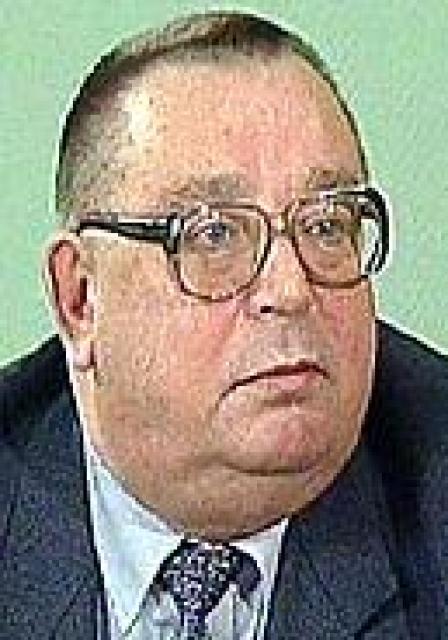
Valentin Pavlov
 Russia
Biography of Valentin Pavlov
Valentin Sergeyevich Pavlov was a Soviet statesman and the Prime Minister of the USSR. He was born on September 26, 1937, in Moscow. His father, Sergey Nikolayevich Pavlov, was a former orphan who worked as a driver during World War II. His mother, Nadezhda Ivanovna Gromova, was a nurse and a participant of the Great Patriotic War.
Pavlov's sister, Nina Sergeyevna, was the first in the family to graduate from the Moscow Financial Institute. She worked in the field of practical finance in Moscow's construction organizations. Pavlov's wife, Valentina Petrovna, also studied at the Moscow Financial Institute and worked in the Moscow City Transport Authority. Their son, Sergey, followed in his parents' footsteps and became a finance professional.
Pavlov's career in finance began after he graduated from the Moscow Financial Institute in 1958. He started working as an inspector of state revenues in the Kalinin District Finance Department in Moscow. He was then assigned to various organizations, where he analyzed and monitored their financial activities. During this time, Pavlov noticed the inconsistencies in certain economic and financial instruments and made several suggestions for improvement.
Pavlov's talents did not go unnoticed, and he was invited to the Ministry of Finance, where he met with senior officials and presented his ideas. He was later appointed to the Ministry and began working as an economist, senior economist, and deputy head of the Department of Financing Construction and Design Organizations.
In 1966, Pavlov joined the Ministry of Finance of the USSR as the deputy head of the Department of Financing Heavy Industry. He played a crucial role in financing major industrial projects, such as the construction of strategic roads around Moscow and the development of oil and gas fields in Western Siberia. He also had to handle emergencies, such as the need to quickly build protective barriers to prevent an environmental disaster in Siberia.
During his time at the Ministry of Finance, Pavlov worked closely with prominent figures in the field, such as V.N. Maslennikov, V.A. Salnikov, and V.P. Nikol'skiy. They formed a team that discussed and developed innovative financing methods for complex projects. Pavlov's experience during this period shaped his belief in the importance of preserving working capital in all circumstances.
In 1968, Pavlov became the deputy head of the Budget Department, which was responsible for developing and coordinating financial plans and instruments. He also served as a lecturer at the All-Union Correspondence Financial and Economic Institute, teaching courses on the state budget and finance.
Pavlov's career continued to advance, and he was appointed as the First Deputy Minister of Finance in 1979. In this role, he played a crucial role in shaping the financial policies of the Soviet Union. He focused on ensuring the balance between financial budgets and monetary circulation and participated in the financing of various industries.
In 1989, Pavlov was appointed as the Chairman of the State Planning Committee (Gosplan) and became a member of the Council of Ministers. He played a significant role in the economic reforms of the late 1980s, including the introduction of market-oriented policies and the decentralization of economic decision-making.
In 1990, Pavlov was appointed as the Prime Minister of the USSR. He faced numerous challenges, including the ongoing political and economic crisis in the country. However, his tenure was short-lived, as he resigned from his position in 1991 following the failed coup attempt against Soviet leader Mikhail Gorbachev.
After leaving office, Pavlov faced legal troubles and was imprisoned from August 1991 to January 1993. He passed away on March 30, 2003, at the age of 65.
Valentin Pavlov was a dedicated and influential figure in Soviet politics and finance. His contributions to economic policies and financial management have left a lasting impact on the country's history.