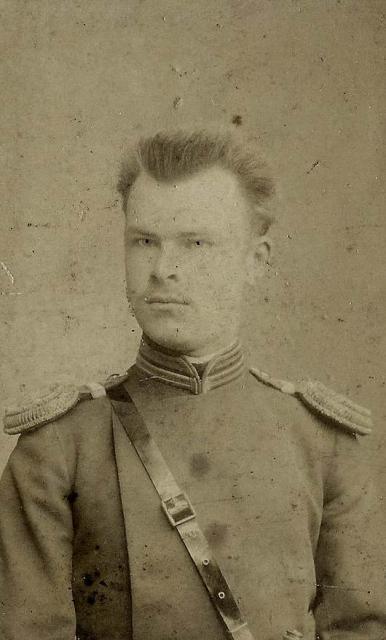
Valentin Vvedensky
- The Life and Legacy of a Russian Army General
- Military Education and Career
- Officer Class and Russo-Japanese War
- World War I and the Caucasus
- Civil War and White Movement
- Decorations and Awards
- Red Terror and Tragic Execution
The Life and Legacy of a Russian Army General
Birth and Early EducationBorn in the city of Orenburg, Russia, the future general was a member of the Orthodox Christian faith and hailed from the noble class. His early education took place at the Neплюevsky Cadet Corps.
Military Education and Career
The officer continued his studies at the 1st Pavlovsk Military Cadet School, graduating with honors. He initially served in the 149th Chernomorsky Infantry Regiment and later transferred to the 13th Sapper Battalion.
Officer Class and Russo-Japanese War
In 1900, he reached the rank of Staff Captain and attended the Officer Class of the Military Electro-Technical School. His military prowess was tested during the Russo-Japanese War (1904-1905).
World War I and the Caucasus
The general rose to the position of Lieutenant Colonel in 1910 and served in the 3rd Caucasian Sapper Battalion from 1913 to 1916. He actively participated in World War I, attaining the rank of Colonel in 1915 and commanding the 6th Caucasian Sapper Battalion.
Civil War and White Movement
During the Russian Civil War, the officer sided with the White Movement as part of the Volunteer Army and the Armed Forces of South Russia. In 1919, he assumed command of the Caucasian Engineering Battalion.
Decorations and Awards
His military contributions were recognized with numerous decorations, including the Order of Saint Stanislaus, 2nd degree with swords, the Order of Saint Anna, 2nd degree with swords, and the Order of Saint Prince Vladimir, 4th degree with swords and bow.
Red Terror and Tragic Execution
Following a sentence by the Special Department of the 11th Army, the general was executed during the Red Terror in Baku on September 12, 1920. His legacy was partially restored through rehabilitation on May 22, 1992.




