Valentina Tereshkova
 Russia
- Valentina Tereshkova - The First Female Cosmonaut
- Early Life
- Selection for Cosmonaut Training
- The Vostok-6 Mission
- Post-Space Career and Personal Life
- Public Contributions
Valentina Tereshkova - The First Female Cosmonaut
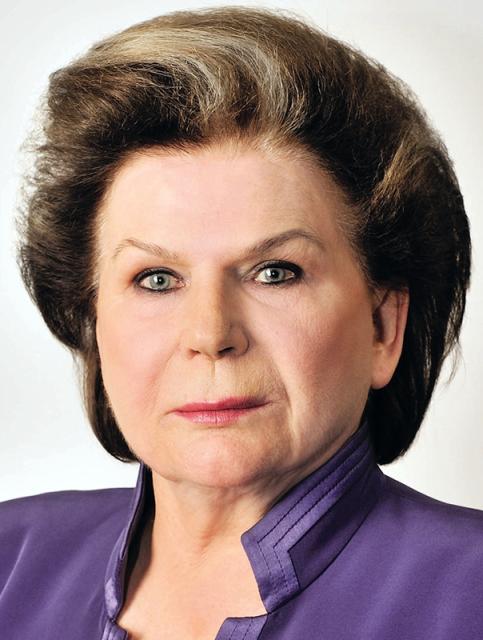
In the early 1960s, the Soviet Union solidified its international reputation through various events, primarily in the field of space exploration. After the successful flights of Yuri Gagarin and German Titov, the leadership of the Soviet Air Force decided to form a group of women cosmonauts. The selection process was conducted through the DOSAAF network and followed strict criteria: proficiency in parachute jumping, young age, excellent health, and average height and weight. Among the five selected girls was Valentina Tereshkova, a weaver from Yaroslavl and a Komsomol secretary, who was also a first-class parachutist.
Early Life
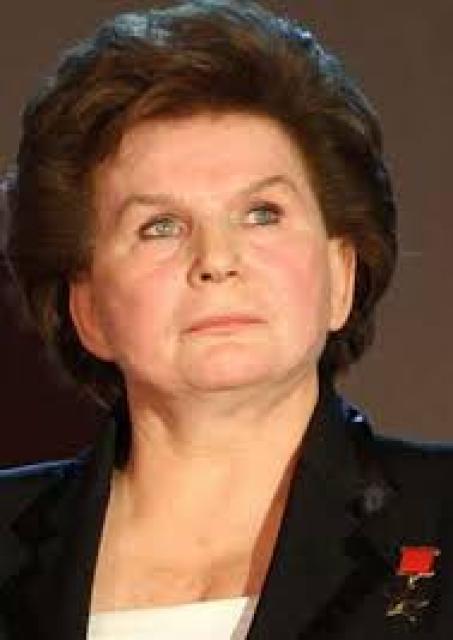
Valentina Tereshkova was born on March 6, 1937, in the now non-existent village of Bolshoye Maslennikovo in Yaroslavl Oblast. Her father, Vladimir Aksyonovich, and mother, Elena Fedorovna, originally came from Belarus, and Belarusian was spoken in their home. Apart from Valentina, the Tereshkov family had two more children - an older sister named Lyudmila and a younger brother named Vladimir. In 1940, the children became orphans when Vladimir Aksyonovich died during the Finnish War. After the difficult years of the war, the family moved to Yaroslavl, where Valentina attended School No. 32, which now bears her name. She showed a talent for music and began learning to play the balalaika. Due to the family's financial situation, Valentina transferred to evening school in 1954 and started working as a bracelet maker at a tire factory. A year later, she became a weaver at the Krasny Perekop textile factory, where her mother and sister also worked. After finishing school, Valentina enrolled in the Evening School of Light Industry and began attending an aeroclub in 1959, where she practiced parachuting.
Selection for Cosmonaut Training
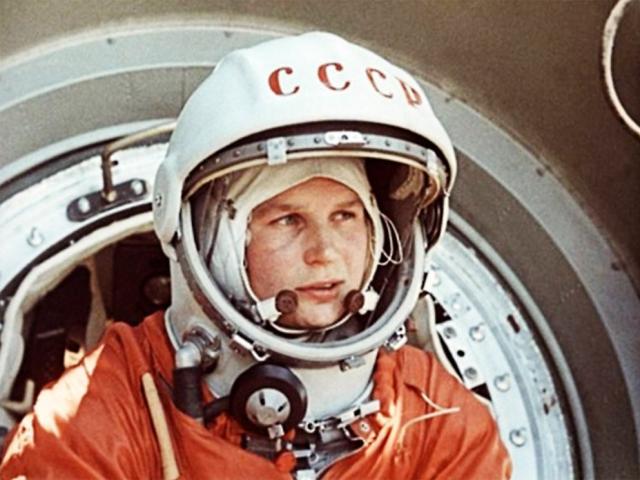
In early 1962, a selection process for women cosmonauts took place at aeroclubs. The best parachutist in Yaroslavl was an art teacher named Tatyana Morozycheva, but she was pregnant at the time of the medical examination. Valentina Tereshkova, with her 90 jumps, successfully passed all the tests and was selected. In March 1962, the Women's Cosmonaut Group was formed, and Valentina was appointed the senior member. All the group members were admitted to the Communist Party and given military ranks. The training regime for the women was even stricter than that for men, including thermal camera and pressure chamber tests, zero-gravity training, water parachute jumps, and wearing the spacesuit. Tereshkova excelled in all the tests.
The Vostok-6 Mission
Originally, the program planned to launch two female cosmonauts simultaneously, but it was later decided to proceed with a single spacecraft piloted by a woman. Valentina Tereshkova, nicknamed "Chaika" (Seagull), was selected for the mission. On June 14, 1963, the Vostok-5 spacecraft, piloted by Valery Bykovsky, was launched. Two days later, on June 16, Valentina Tereshkova's Vostok-6 was launched. According to the commission's feedback, she had a better launch than many of her predecessors. However, the mission itself did not go well due to errors in the manual control system, which caused all commands to be executed in the opposite direction. The spacecraft nearly deviated from its orbit. Despite the difficulties, Tereshkova remained composed. The whole country listened to her radio communications with Bykovsky and heard her singing. However, due to the extreme strain, she was unable to conduct any planned experiments. The flight lasted seventy hours in near-zero-gravity conditions, and Tereshkova felt very sick and could not eat due to nausea. The spacecraft was landed with the help of the automatic control system, but contact with the mission control center was lost in the dense layers of the atmosphere. Valentina successfully ejected and landed in a lake. Strong winds dragged her heavy parachute across the ground, resulting in bruises on her face and a near-unconscious state. The rescue team brought her to a hospital, where she recovered within a day. Reporters covered her safe landing, marking the beginning of her new life as the first female cosmonaut.
Post-Space Career and Personal Life
Valentina Tereshkova became a national symbol and earned the nickname "Miss Universe." She received numerous awards and had poems and songs dedicated to her. However, Tereshkova suffered from health issues for the rest of her life, including frequent bleeding and fragile bones. Despite these challenges, her career continued to flourish. She worked as an instructor at the Cosmonaut Training Center, graduated with honors from the Zhukovsky Air Force Engineering Academy, obtained a candidate of sciences degree, and received successive military ranks. She retired as a general in 1995. From 1997, after leaving the cosmonaut corps, she worked as a senior research fellow at the Cosmonaut Training Center.
Valentina Tereshkova's marriage to fellow cosmonaut Andriyan Nikolayev in November 1963 gained widespread attention. Although rumors circulated about political motives behind their union, both Valentina and Andriyan denied them. Valentina's pregnancy was difficult, and her daughter Elena (born in 1964) required close medical supervision during her childhood. They divorced in 1982, reportedly after Valentina had sought approval from Soviet leader Leonid Brezhnev. She then married military surgeon Yuly Shaposhnikov, who passed away. Valentina currently has two grandchildren, Alexey Mayorov and Andrey Rodionov. Andriyan Nikolayev remained unmarried until his death in 2004.
Public Contributions
In addition to her space achievements, Valentina Tereshkova played an active role in public life. As the Chairwoman of the Soviet Women's Committee for over twenty years, she advocated for women's rights and successfully increased the duration of maternity leave. She personally handled requests received by the committee and held significant influence in this position. In 1987, she became the Chairwoman of the Presidium of the Society for Friendship with Foreign Countries and played a key role in organizing international aid after the Spitak earthquake. Valentina Tereshkova's contributions to her hometown of Yaroslavl include the opening of a university and the construction of a technical school, a river station, and a planetarium.