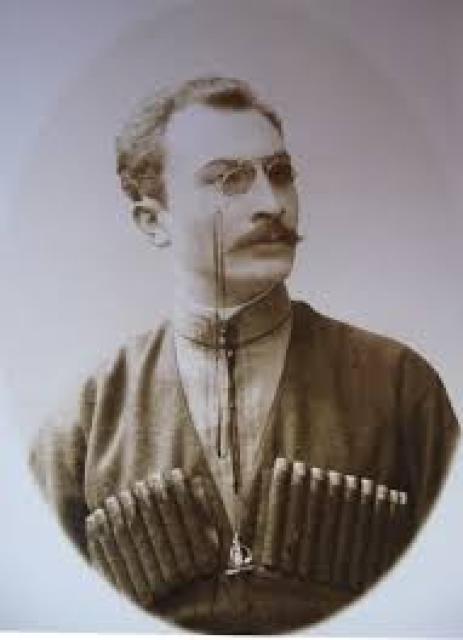
Valerian Gunia
- Biography of a Georgian Cultural Icon
- Theatrical Career
- Film Debut and Soviet Influence
- Literary Contributions
- Legacy and Recognition
Biography of a Georgian Cultural Icon
Early Life and EducationAkaki Khorava, a prominent Georgian actor, playwright, director, theatrical figure, critic, and translator, was born into a noble family. He initially studied agriculture at the Petrovsky-Razumovsky Academy in Moscow before returning to Georgia, where his passion for theater blossomed.
Theatrical Career
Khorava immersed himself in the theater scene, both as an amateur actor and a professional director. He organized performances, contributed to theatrical publications, and established himself as a highly influential critic. His democratic beliefs and progressive ideas shaped his artistic vision.
Film Debut and Soviet Influence
From 1913 onward, Khorava graced the silver screen, starring in numerous films. After the establishment of Soviet rule in Georgia, he played a significant role in developing the theatrical landscape of the country. His legacy is commemorated through the Poti State Theater, which bears his name.
Literary Contributions
Khorava's impact extended beyond the stage and screen. As a gifted translator, he introduced countless literary masterpieces to Georgian audiences. His notable translations include works by Nikolai Gogol, Alexander Ostrovsky, William Shakespeare, Molière, Victor Hugo, Henrik Ibsen, and Gerhart Hauptmann.
Legacy and Recognition
Akaki Khorava's dedication to Georgian theater and culture earned him the title of People's Artist of the Georgian SSR in 1933. A memorial plaque honoring his contributions is displayed at 24/21 Galaktion Tabidze Street in Tbilisi, a testament to the enduring appreciation for his artistic brilliance.


