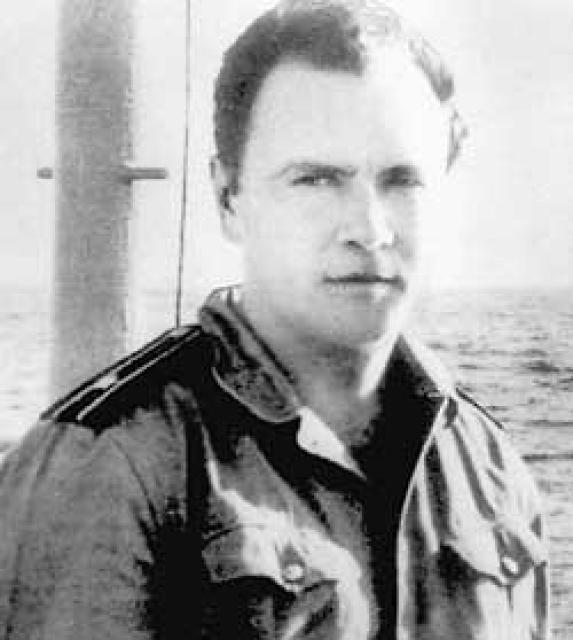
Valeriy Sablin
- The Case of Valery Sablin and Alexander Shein
- Valery Sablin's Background
- - Had a positive service record and was married with a young son
- Resistance and Aftermath
- - Sablin and eleven of his supporters were arrested.
- Post-Soviet Reevaluation
- - Full rehabilitation was denied due to the severity of his actions.
The Case of Valery Sablin and Alexander Shein
Prelude to the IncidentValery Sablin, a Soviet naval officer, was convicted of high treason and executed in 1976 for hijacking a warship and attempting to sail to Sweden. However, after the collapse of the Soviet Union, Sablin and his accomplice, Alexander Shein, were reevaluated as victims of the totalitarian regime.
Valery Sablin's Background
- Born in 1939- Graduated from the Frunze Higher Naval School in 1960
- Served in various roles before becoming Deputy Commander for Political Affairs on the BPK "Storozhevoi"
- Had a positive service record and was married with a young son
The Hijacking Incident- On November 8, 1975, Sablin seized command of the "Storozhevoi" by locking his superior, Captain Potulny, in the sonar compartment.
- He rallied officers and sailors, expressing concerns about alleged injustices and corruption in Soviet society.
- Sablin proposed sailing to Kronstadt, declaring it an independent territory, and broadcasting his grievances on national television.
Resistance and Aftermath
- Some crew members supported Sablin's ideas, others did not.- Attempts to release Captain Potulny were thwarted by Sablin's supporters.
- Senior Lieutenant Firsov escaped to a nearby submarine and alerted the authorities.
- The "Storozhevoi" sailed out into the Gulf of Riga, prompting air and sea surveillance.
- On November 9, loyal crew members overpowered Sablin and regained control of the ship.
- Sablin and eleven of his supporters were arrested.
Trial and Sentencing- Sablin and Shein confessed to their involvement and were sentenced by the Supreme Court of the USSR.
- Sablin was sentenced to death by firing squad, while Shein received eight years in prison.
Post-Soviet Reevaluation
- After the collapse of the Soviet Union, Sablin and Shein's case was reopened.
- In 1994, the Supreme Court reduced Sablin's charges to military offenses and sentenced him to ten years in prison.
- Full rehabilitation was denied due to the severity of his actions.
Sablin's Motivation- Sablin's writings revealed that he had long held concerns about political and social issues in the Soviet Union.
- He cited specific grievances, such as economic shortages, corruption, and bureaucratic inefficiency.
- Sablin believed that the government had deviated from Lenin's principles and that he was obligated to speak out against perceived injustices.




