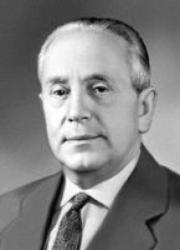
Valter Bothe
 Germany
- Early Life and Education
- World War I and Captivity
- Post-War Career
- Research on Scattering Phenomena
- Compton Effect and Statistical Laws of Conservation
- The Coincidence Method
- Disproof of Statistical Hypothesis
- Nobel Prize and Later Research
- Physicist and Director
- World War II and Later Career
- Nobel Prize and Legacy
- Personal Life and Death
- Honors and Awards
Early Life and Education
Walter Wilhelm Georg Bothe was born in Oranienburg, Germany, on October 17, 1891. His father, Friedrich Bothe, was a merchant. In 1908, Bothe enrolled at the University of Berlin, where he studied physics, mathematics, and chemistry.
World War I and Captivity
In 1914, while working under Max Planck, Bothe received his doctorate for his theoretical research on the interaction of light with molecules. During World War I, Bothe served in the German army and was captured by the Russians in 1915. Sent to Siberia, he studied Russian and continued his pursuits in theoretical physics.
Post-War Career
Returning to Germany in 1920, Bothe joined Hans Geiger's radiation laboratory at the Reich Physical-Technical Institute, where he had briefly worked in 1913. Concurrently, he lectured in physics at the University of Berlin.
Research on Scattering Phenomena
Throughout the early 1920s, Bothe conducted experimental and theoretical investigations on the deflections of alpha and beta particles in matter. While most studies focused on individual particle interactions with individual atoms, Bothe explored the more complex case where a fast particle traversing a substance interacts with numerous atoms, with each interaction deflecting the particle by an amount proportional to its strength. To solve this problem, Bothe developed a novel statistical approach.
Compton Effect and Statistical Laws of Conservation
In the early 1920s, physicists developed quantum theory, which challenged certain tenets of classical physics. An enigma of quantum theory was the wave-particle duality of light and other electromagnetic radiation. In 1923, Arthur H. Compton's discovery of the Compton effect provided compelling evidence of this duality.
In 1924, Niels Bohr, Hendrik Kramers, and John Slater proposed a reformulation of quantum theory that rejected fundamental principles of classical physics, such as the conservation of energy and momentum in individual particle interactions. Bothe, inspired by their work, devised a method to test this statistical interpretation of conservation laws using the Compton effect.
The Coincidence Method
Geiger's original Geiger counter, invented in 1913, could only detect heavy charged particles. By 1924, Geiger had developed a modified version known as a needle counter, capable of registering electrons. Collaborating with Geiger, Bothe invented a special technique using this counter, later known as the "coincidence method." Two needle counters filled with hydrogen were connected such that, when exposed to an X-ray beam, collisions between X-ray quanta and electrons in the hydrogen atoms occurred in the first counter. The recoil electrons were detected by this counter, while the scattered quanta passed into the second counter, where they ejected a smaller number of electrons, registering in the second counter and indicating the presence of the scattered quanta. Electrical pulses generated by the particle detections were automatically recorded, allowing the experimenter to determine whether they occurred simultaneously.
Disproof of Statistical Hypothesis
Bothe and Geiger found that simultaneous detections of a scattered quantum and a recoil electron occurred too frequently to be random. Their statistical analysis revealed that both particles consistently emerged from each collision. They concluded that Bohr's statistical hypothesis was incorrect and that classical conservation laws held true even for individual interactions at the subatomic level. Their finding, which Bohr and others accepted, influenced the development of quantum mechanics in the 1920s.
Nobel Prize and Later Research
Bothe's coincidence method, for which he would later receive the Nobel Prize in Physics, became an invaluable tool in modern particle detection and measurement systems. From 1926, Bothe studied nuclear transmutations induced by alpha particle bombardment, discovering a new and highly penetrating radiation produced by the bombardment of beryllium with alpha particles in 1930. This work led to the discovery of the neutron by James Chadwick in 1932. In 1929, Bothe and Werner Kolhörster employed the coincidence method to detect cosmic rays, establishing that they were a stream of extremely energetic particles rather than gamma rays, as previously believed.
Physicist and Director
In 1930, Bothe became Director of the Department of Physics at the University of Gießen. In 1932, he was appointed Director of the Department of Physics at the University of Heidelberg, and in 1934, he became Director of the Department of Physics at the Max Planck Institute for Medical Research in Heidelberg. At the Max Planck Institute, he oversaw the construction of a cyclotron, a particle accelerator used in nuclear research, which was completed in 1943.
World War II and Later Career
During World War II, Bothe played a leading role in Germany's nuclear energy project, headed by Werner Heisenberg. He studied the properties of uranium nuclei and developed a theory of neutron diffusion, describing the scattering, absorption, and production of neutrons in systems containing fissile elements like uranium. After the war, Bothe returned to work on electron scattering and cosmic ray physics, also contributing to the theoretical understanding of beta decay and gamma radiation from nuclei.
Nobel Prize and Legacy
In 1954, Bothe received the Nobel Prize in Physics "for the coincidence method and his discoveries made therewith." He shared the prize with Max Born, who was recognized for his contributions to quantum mechanics. Confined to bed due to severe circulatory problems, Bothe could not attend the Nobel Prize ceremony and sent his daughter to receive the award on his behalf. "I think the most important lesson I learned from Geiger," Bothe wrote in his Nobel lecture, "was to select one among many possible and probably useful experiments which is the most urgent at the moment and to carry it out with the simplest possible apparatus."
Despite his illness, Bothe continued to direct the institute in Heidelberg. His ailments caused him great suffering and prevented him from fully savoring his late-won fame.
Personal Life and Death
Bothe married Varvara Belova from Moscow in 1920, and they had two children. Known for his industriousness, Bothe was strict in the laboratory but warm and hospitable at home. He was a talented artist, painting both in oil and watercolor, and an avid pianist who particularly enjoyed playing the works of Bach and Beethoven. The German physicist died in Heidelberg on February 8, 1957.
Honors and Awards
In addition to the Nobel Prize, Bothe received the Max Planck Medal of the German Physical Society and the Grand Cross of the Order of Merit of the Federal Republic of Germany. In 1952, he was awarded the Pour le Mérite order for his services to science and art. He was a member of the academies of sciences in Heidelberg, Göttingen, and Leipzig.