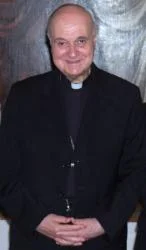
Varsonofy Slobodskoy
Archimandrite Varsonofy (Valentin Mikhailovich Mamchin) was a Russian Orthodox monk and priest who served in monasteries in the Yaroslavl region and Kharkiv. Born in Saint Petersburg in 1875, he was arrested during the Soviet anti-religious campaign of 1937 and executed in Kharkiv the following year. In 1993, the Ukrainian Orthodox Church recognized him as a locally venerated martyr of the Kharkiv diocese and the Sloboda region.
Education and monastic life
Mamchin studied at the Imperial School of Jurisprudence in Saint Petersburg, completing his education in 1897. He later chose a religious vocation and entered the Tolga Monastery near Yaroslavl. In 1909, he was ordained a hieromonk, a monk who had become a priest. He served at Tolga before moving to the Protection (Pokrovsky) Monastery in Kharkiv.
Church service in Kharkiv
After the monastery closed, Varsonofy continued his ministry in Kharkiv, serving at different city churches without a permanent parish. In 1924, church authorities proposed opening a vicar bishop’s see in Lebedyan and appointed him to it as a hieromonk. The appointment did not change the course of his service in Kharkiv; by the time of his final arrest, he held the rank of archimandrite, a senior monastic title.
Arrest and death
On December 28, 1937, Soviet authorities arrested Varsonofy in Kharkiv. He was accused of activity against Soviet power and sentenced to death two days later. The sentence was carried out by shooting on January 19, 1938, in Kharkiv, during the period of mass repression of clergy and other perceived opponents of the state.
Veneration and legacy
On June 22, 1993, the Holy Synod of the Ukrainian Orthodox Church decided to canonize Varsonofy locally in the Kharkiv diocese. The formal service of glorification took place in Kharkiv in July of that year. His feast is observed on June 1 in the Gregorian calendar, corresponding to May 19 in the Julian calendar.
Varsonofy is remembered as one of the clergy persecuted and executed during the Soviet era. His story reflects the risks faced by Orthodox clergy who continued their work as church institutions were closed and religious practice came under state pressure.