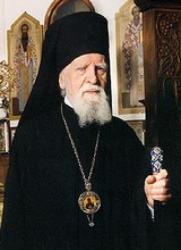
Andrey Cesariyskiy
- Saint Andrew of Caesarea, Cappadocia
- Commentary on the Apocalypse
- Translation and Impact
- Artistic Representation
- Question: "What is the 'mark of the Antichrist'?"
Saint Andrew of Caesarea, Cappadocia
Archbishop and Interpreter of the ApocalypseSaint Andrew of Caesarea was an archbishop who is revered as a saint in the Orthodox Church. Despite the scarcity of biographical information about him, his fame stems from his commentary on the Book of Revelation by John the Divine.
Commentary on the Apocalypse
Written between 563 and 614, Andrew's commentary on the Apocalypse is one of the earliest patristic interpretations of the text. It is highly regarded among Orthodox faithful, particularly Russian Old Believers, and has significantly influenced subsequent theologians.
In his commentary, Andrew defends the authenticity of the Apocalypse by citing early Christian authors such as Papias of Hierapolis, Irenaeus of Lyon, Methodius of Patara, and Hippolytus of Rome. While acknowledging the inevitability of End Times, he emphasizes in his preface:
Translation and Impact
Andrew's commentary was translated from Greek into Georgian in the 10th century, Armenian in the 11th century, and into Slavonic (likely in Bulgaria) by the 10th century. Until the mid-15th century, the Slavonic Apocalypse primarily existed in Andrew's commentary form rather than its original text.
Artistic Representation
Andrew's commentary is adorned with miniatures that reflect the ancient Russian tradition of facial depictions in manuscripts.