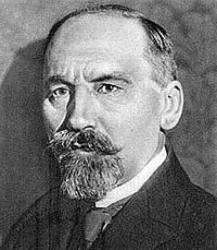
Vasilij Kelsiev
- Vasily Ivanovich Kelsiev
- Emigration to England and Political Activism
- Travels and Disillusionment
- Return to Russia and Literary Career
- Final Years and Legacy
Vasily Ivanovich Kelsiev
Early Life and Linguistic AbilitiesVasily Ivanovich Kelsiev (1835-1872) was a Russian writer and emigrant. He initially studied oriental languages at the University of Saint Petersburg, demonstrating exceptional progress. Kelsiev later acquired proficiency in up to 25 languages and dialects, including 14 that he could converse in fluently.
Emigration to England and Political Activism
In 1858, while en route to America, Kelsiev was forced to seek shelter in Plymouth during a storm. He decided to remain in England and severed ties with Russia. Kelsiev aligned himself with Alexander Herzen and Nikolai Ogarev, prominent revolutionary figures of the time.
Kelsiev saw the schisms within Russian society as an opportunity to advance revolutionary causes. With Herzen's support, he published "Obshchee Vece" alongside the journal "Kolokol." These publications focused on addressing the schisms within the Russian Orthodox Church.
Travels and Disillusionment
In order to further his revolutionary agenda, Kelsiev organized a secret trip to Moscow, where he sought support among the Old Believers. However, his efforts were unsuccessful, and he left for Turkey. He then settled in Tulcea, on the Danube, among the Nekrasov Cossacks and Skoptsy.
Kelsiev's faith in revolutionary ideas had begun to waver even before his travels. Life in Tulcea further intensified his doubts. He failed to make any headway with his revolutionary propaganda among the Cossacks. Faced with rejection and personal tragedy (the loss of his brother, wife, and children to cholera in 1865), Kelsiev relocated to Vienna.
Return to Russia and Literary Career
In Vienna, Kelsiev devoted himself to ethnography and Slavic mythology, publishing articles in "Otechestvennye Zapiski" and "Golos" under the pseudonym Ivanov-Zheludkov. His travels in Slavic lands inclined him towards Slavophilism.
In May 1867, Kelsiev returned to Russia and surrendered to the authorities. He was granted a pardon after providing a sincere and truthful account of his life. Kelsiev returned to public service and lectured on the Skoptsy at the Geographical Society.
His books, "Perezhitoe i Pereudumannoe" and "Galichina i Moldavia," received a lukewarm reception from literary circles. Despite this, he continued to publish articles in various journals and wrote two historical novels, "Moskva i Tver" and "Pri Petre."
Final Years and Legacy
Kelsiev's health declined in his later years due to psychological distress, poverty, and excessive alcohol consumption. He died in 1872, leaving behind a legacy as a complex and multifaceted figure. His wife, Zinaida Alekseevna Verderevskaya, also contributed as a writer to several publications.
Kelsiev's life story has been the subject of significant scrutiny and debate. Alexander Herzen, Nikolai Mikhailovsky, and others have written about his political motivations and the impact of his experiences on his worldview.