Vasiliy Bobinsky
 Ukraine
- Early Life and Education
- Military and Political Involvement
- Literary Contributions
- Persecution and Imprisonment
- Return to Soviet Ukraine and Subsequent Arrests
- Rehabilitation and Legacy
Early Life and Education
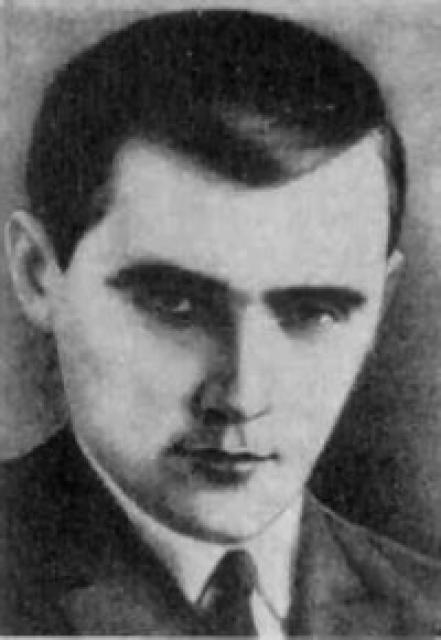
Yaroslav Halan, born in Ukraine, received his education at gymnasiums in both Lviv and Vienna. His formative years were marked by his participation in the conflict of 1918-1920.
Military and Political Involvement
In 1920, Halan joined the Red Ukrainian Galician Army. Later, from 1923 onwards, he actively engaged in the illegal communist press within Western Ukraine. His involvement in the literary echelons of the region is evident through his establishment and editing of the literary weekly "Svit" (1925-1927) and the journal "Okna" (1927-1930). As a prominent member of the Western Ukrainian proletarian writers' group "Horno" and the literary organization "Western Ukraine," Halan played an influential role in shaping the region's literary landscape.
Literary Contributions
Halan made a significant mark in Ukrainian literature with his exploration of erotic poetry. His cycle of sonnets titled "Night of Love," penned between 1921-1922 and 1923, stands as one of the earliest examples of such literature within the Ukrainian context. This work was published as a standalone book by the Lviv publishing house "Mlechnyi Shlyakh."
Persecution and Imprisonment
Halan's political activities attracted the attention of Polish authorities, leading to his imprisonment in 1927. While incarcerated, he composed the noteworthy poem "The Death of Franko," which earned recognition from the People's Commissariat of Education of the Ukrainian SSR.
Return to Soviet Ukraine and Subsequent Arrests
After his release from Polish prison, Halan relocated to Soviet Ukraine in 1930. He continued his literary pursuits as a member of the "Western Ukraine" organization. However, his political affiliations once again brought him into conflict with authorities. In 1933, he was arrested by the NKVD as a member of the Ukrainian Military Organization (UVO) and sentenced to three years of imprisonment. Following his release, Halan worked on the construction of the Volga-Moscow Canal. Tragically, in 1937, he was arrested once more and executed on January 28, 1938.
Rehabilitation and Legacy
Halan's legacy was overshadowed by his untimely demise, but he was eventually rehabilitated in 1956. His contributions to Ukrainian poetry, particularly in the realm of erotic verse, continue to be valued and studied today.