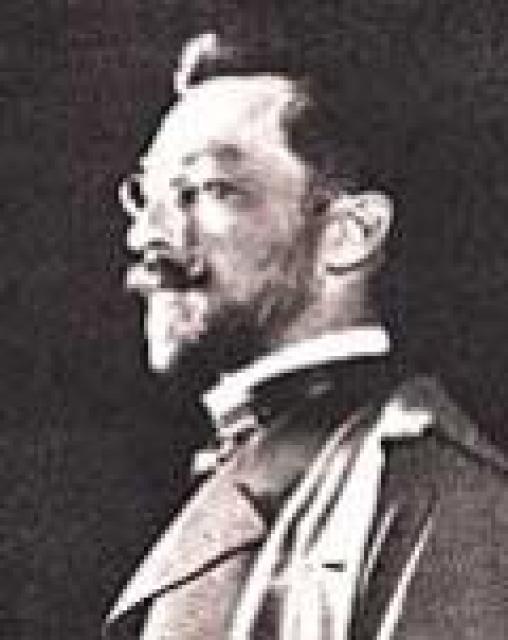
Vasiliy Kandinskiy
 Russia
- Early Life and Education
- Artistic Training and Exhibitions
- Der Blaue Reiter and Abstract Art
- Return to Russia and Soviet Art
- Berlin, Bauhaus, and Paris
- Legacy
- Later Life and Death
Early Life and Education
Born on December 4, 1866, in Moscow, Wassily Kandinsky was a Russian painter who played a pivotal role in the development of abstract art. His early childhood was marked by extensive travel due to his parents' wanderlust.
In 1886, Kandinsky enrolled at Moscow State University to study law and economics. However, a visit to Paris in 1889 ignited his passion for art. By 1893, he had received his doctorate but lost interest in the social sciences.
Artistic Training and Exhibitions
In 1896, Kandinsky decided to pursue a career in art and moved to Germany. He studied under Anton Azbe in Munich before enrolling at the Academy of Fine Arts. In 1900, he graduated with a diploma.
Kandinsky's first exhibitions took place in academic shows throughout Europe. In 1903, he held his solo debut in Moscow, followed by another exhibition in Poland two years later.
Der Blaue Reiter and Abstract Art
In 1902, Kandinsky met Gabriele Münter. Together, they moved to a house in Bavaria in 1909, where he developed his unique style of abstract art. He was a co-founder of the Munich-based artist group Der Blaue Reiter.
Return to Russia and Soviet Art
With the onset of World War I in 1914, Kandinsky returned to Russia. He welcomed the Revolution, believing in the initial support it showed for abstraction. He became a professor at the Moscow Academy of Fine Arts and played a key role in establishing the Institute of Artistic Culture.
Berlin, Bauhaus, and Paris
In 1921, Kandinsky moved to Berlin due to the Soviet Union's rejection of abstract art. In 1922, he joined the Bauhaus school in Weimar, where he taught free, non-applied art. In 1928, he became a German citizen.
With the rise of Nazism in 1933, Kandinsky moved to Paris. He spent the remaining 11 years of his life in the Parisian suburb of Neuilly-sur-Seine, where he became a French citizen in 1939.
Legacy
Kandinsky's pioneering work in abstract art revolutionized the art world. He believed that colors and forms could convey emotions and spiritual meanings. His theories and paintings have profoundly influenced countless artists and continue to inspire contemporary abstract art.
Later Life and Death
Kandinsky died in Neuilly-sur-Seine, France, on December 13, 1944. He left behind a legacy of innovative and groundbreaking art that has secured his place as one of the most influential artists of the 20th century.