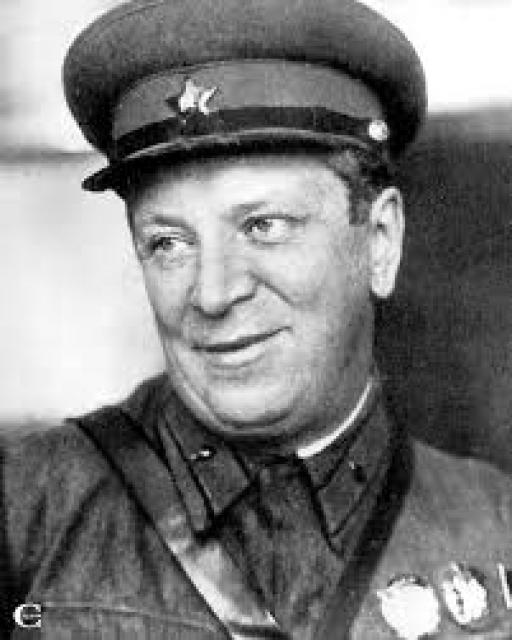
Vasiliy Lebedev-Kumach
- The Acclaimed Poet of Soviet Songs: Vasily Ivanovich Lebedev-Kumach
- Literary Breakthrough:
- Official Recognition:
- Controversies and Legacy:
The Acclaimed Poet of Soviet Songs: Vasily Ivanovich Lebedev-Kumach
Early Life and Career:Vasily Ivanovich Lebedev-Kumach was born in Moscow on August 24, 1898. Despite his father being a shoemaker, Lebedev-Kumach's true calling lay in poetry. He began writing verses at the tender age of 13, with his first poem published in 1916.
During the tumultuous years of the Russian Revolution and Civil War, Lebedev-Kumach served in the Red Army's printing bureau and agitation department. He produced propaganda materials, including stories, articles, and slogans for frontline newspapers. Simultaneously, he pursued higher education at Moscow State University's history and philology faculty.
Literary Breakthrough:
In the early 1920s, Lebedev-Kumach emerged as a prominent figure in the Soviet literary scene. He contributed to various publications, including "Rabochaya Gazeta" and the satirical magazine "Krokodil," where he worked for 12 years. It was during this period that he established himself as a leading writer of song lyrics, penning unforgettable tunes for films such as "Merry Boys," "Circus," and "Volga-Volga."
Official Recognition:
Despite being a talented poet, Lebedev-Kumach's association with the Soviet authorities has been a subject of debate. He received numerous accolades, including the Stalin Prize, and held political positions as a deputy of the Supreme Soviet of the Russian SFSR. However, it is important to note that his best works, which remain beloved to this day, lack any overt ideological undertones.
Controversies and Legacy:
A dark cloud cast over Lebedev-Kumach's legacy during the perestroika era, with accusations of plagiarism surrounding his iconic song "Svyashchennaya Voina" (Sacred War). The song, which became an anthem of the Great Patriotic War, was rumored to have been originally penned by another author. However, these allegations have been thoroughly refuted by scholars, who have established Lebedev-Kumach's authorship through extensive archival research.
In his later years, Lebedev-Kumach continued to write songs, plays, and screenplays. He died in Moscow on February 20, 1949, leaving behind an enduring legacy as one of the greatest poets of Soviet music. His contributions to the cultural fabric of Russia remain immeasurable, and his songs continue to inspire and uplift generations of listeners.