Vera Rubin
 USA
USA- American Astronomer Vera Rubin
- Early Life and Education
- Galaxy Rotation Problem
- Career and Contributions
- The Galaxy Rotation Problem and Dark Matter
American Astronomer Vera Rubin
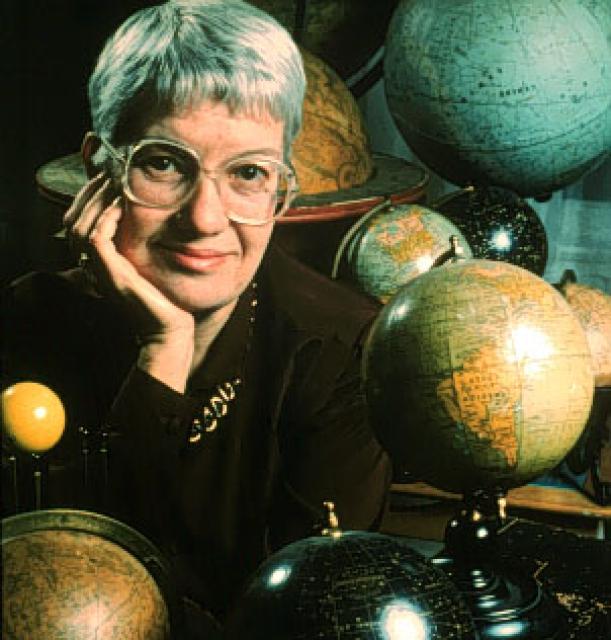
Vera Rubin was an American astronomer and specialist in galaxy rotation. She is best known for her groundbreaking discovery of the discrepancy between the observed rotation of galaxies and the predicted rotation, which is now known as the "galaxy rotation problem".

Early Life and Education
Vera Rubin was born to Philip Cooper, an electrician from Vilnius, Lithuania, and Rose Applebaum, who was originally from Bessarabia. She received her bachelor's degree from Vassar College and initially attempted to enroll in Princeton for advanced astronomy courses. However, at that time, women were not allowed to take advanced astronomy courses, so she was denied admission. This gender-based discrimination was only rectified in 1975. Undeterred, Vera obtained her master's degree from Cornell University, where she specialized in physics and had the opportunity to work with renowned physicists such as Philip Morrison, Richard Feynman, and Hans Bethe.

Galaxy Rotation Problem
During her studies, Vera Rubin was one of the first to notice that galaxies were not moving according to the laws of Hubble's observations. She proposed that galaxies were not only moving away from a center but also rotating as they moved. At the time, few people took this addition to existing theories seriously. She wrote her dissertation at Georgetown University under the guidance of George Gamow, where she proposed that galaxies were not randomly scattered in space but rather formed clear clusters. Although the idea of galactic clusters was acknowledged, it was not seriously considered by many for the next two decades.
Career and Contributions
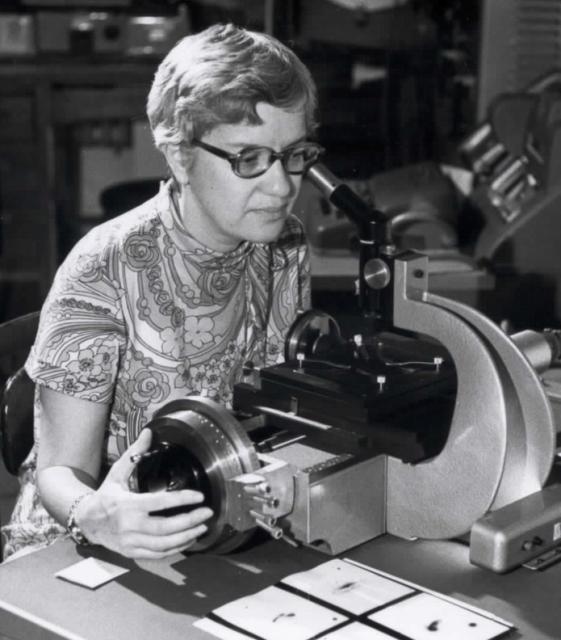
After obtaining her degree, Rubin taught and conducted research at Georgetown University. In 1965, she became the first woman to be granted official access to the Palomar Observatory's facilities, which had previously been closed to female researchers. That same year, Rubin joined the faculty of the Department of Terrestrial Magnetism at the Carnegie Institution of Washington. Collaborating with fellow astronomer Kent Ford, Rubin's early work and concept of galactic clusters led to the discovery of the "Rubin-Ford effect" after extensive research and hundreds of observations. They showed that spiral galaxies rotate differently than expected based on existing models. The controversy surrounding this effect continues to this day, with some astronomers urging Rubin to abandon further research in this area. However, she persisted and delved deeper into the problem.
The Galaxy Rotation Problem and Dark Matter
Over time, Rubin demonstrated that the observed rotational speed of galaxies should scatter them in different directions, but this does not happen. It is as if something extremely massive is holding them together. This phenomenon became known as the "galaxy rotation problem" and led to further research into the theory of dark matter. In the 1970s, Rubin provided some of the most compelling evidence to date for the existence of dark matter. However, direct detection of dark matter has not yet been achieved.
Vera Rubin's pioneering work and contributions to the field of astronomy have had a profound impact on our understanding of galaxies and the universe. Her perseverance and determination in the face of gender-based discrimination have made her an inspiration to aspiring female scientists around the world.