
Verner Von Heidenstam
 Sweden
Biography of Verner von Heidenstam
Verner von Heidenstam was a Swedish writer and the recipient of the Nobel Prize in Literature in 1916. He was born in Elshammar, on the shores of Lake Vättern in southern Sweden, into an ancient aristocratic and wealthy family. His father, Nils Gustaf von Heidenstam, was an engineer and a military officer, while his mother, Magdalena Charlotte Rütterschild, belonged to the local elite.
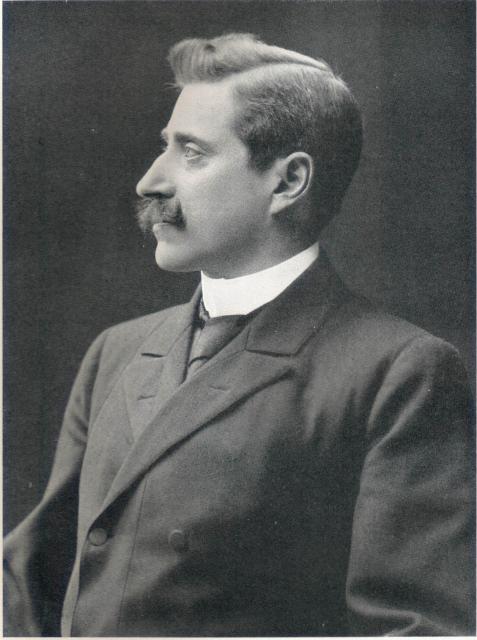
As a shy and physically weak boy, Heidenstam spent most of the year in Stockholm, and during the summer, he would travel with his parents and extended family to Elshammar, where he immersed himself in poetry and heroic sagas. Hoping that the Mediterranean climate would benefit their son, his parents sent him abroad. While traveling through the Middle East, Greece, and Italy, Heidenstam, in his own words, "immersed himself in the multicultural atmosphere of the southern countries."

Upon returning to Sweden in 1880, Heidenstam married a Swiss woman named Emilie Ugglas. Without any specific plans for the future, he developed an interest in art during his travels, and his father decided to send him to study in Paris. Heidenstam and his young wife first went to Rome and then to France, where he studied painting at the School of Fine Arts under the guidance of Jean-Léon Gérôme. In the summer of 1886, Heidenstam and his wife settled in Schloss Brunegg, a medieval castle in the canton of Aargau, Switzerland, where he became acquainted with the playwright August Strindberg. Despite Strindberg being several years older and already a well-known writer, the two young men became friends and engaged in lengthy conversations, discussing their creative plans and attempting to predict the future of Swedish literature and culture.
During this time, Heidenstam realized that poetry, rather than painting, was his true calling. In 1887, he returned to Sweden and settled in Elshammar, where a year later, he published his first collection of poems, "Pilgrimage and Wander Years" ("Vallfart och vandringsar"), which immediately brought him wide recognition. Inspired by his travels in the Mediterranean, these poems were infused with eastern exoticism and childhood memories. They captivated readers with their vivid imagery, contrasting with the somber naturalistic literature of the time.
Over the next decade, Heidenstam wrote prolifically. His novel "Endymion" (1889) depicted the classical world of the Mediterranean, followed by the pamphlet "Renaissance" (1890), a literary manifesto in which he criticized naturalism and called for the creation of a new aesthetics based on rich imagination, a vibrant sense of beauty, and bold, yet not pessimistic, realism. These views found their embodiment in "Hans Alienus" (1892), a novel in prose and verse, in which a Faust-like character searches for the meaning of life.
Three years after the death of his first wife in 1893, Heidenstam married Olga Viberg. However, this second marriage proved to be unstable from the beginning and ended in divorce. In 1900, the poet married Greta Scheberg, who was almost twenty years younger than him. After the publication of his second poetry collection, "Poems" ("Dikter"), Heidenstam became a leading figure in Swedish literature. According to the American critic Alrik Gustafson, "the 'Poems' exude optimism and a profound passion for life...They are infused with a humanism rooted in the poet's historical memory and his reverence for Sweden's heroic past."
Heidenstam's fascination with Swedish history and his attempt to create a new national myth are reflected in his most famous book, "The Charles XII Wars" ("Karolinerna", 1897-1898), a series of interconnected stories about the soldiers of Charles XII, during which Sweden became a powerful European nation. In portraying Charles as an uncompromising, self-sacrificing hero who represents the moral ideal of the nation, Heidenstam indirectly criticizes the materialism in Swedish culture at the turn of the 19th and 20th centuries.
Heidenstam's best works are dedicated to Sweden's past. The novel "The Pilgrimage of Saint Bridget" ("Heliga Birgittas pilgrirnsfard", 1901), the two-volume novel "The Folkung Tree" ("Folkunga Tradet", 1905-1907), and the two-volume prose poem "The Swedes and Their Chieftains" ("Svenskarna och deras hovdingar", 1908-1910) delve into Swedish history and are characterized by deep idealism and patriotic spirit.
While working on these books, Heidenstam gradually moved away from the radical ideas he had espoused while under the influence of progressive European thought and returned to the aristocratic world of his childhood. When Strindberg, who presented himself as a progressive leader of the working class, criticized Heidenstam in the press in 1910, a heated controversy erupted between the two writers. Heidenstam actively defended the aristocracy, earning him the label "the poet of the aristocrats." However, his "New Poems" ("Nya Dikter", 1915) once again confirmed his reputation as an outstanding poetic voice in Sweden. Critics recognized the clarity and emotional depth of these strict classical poems, which showed no trace of bitterness or creative decline.
In 1916, Heidenstam was awarded the Nobel Prize in Literature "as the foremost representative of a new era in world literature." Due to the ongoing First World War, the award ceremony did not take place. In the official critical and biographical essay prepared for the Swedish Academy, the Swedish critic Sven Sederman referred to Heidenstam as "the brightest star in the constellation of original artists who revitalized Swedish poetry at the end of the last century."
Following the receipt of the Nobel Prize until his death, Heidenstam did not publish any new books. However, he completed "When the Chestnut Trees Blossomed" ("När kastanjerna blommade"), a somewhat idealized memoir of his childhood, which was published in 1941, after his death. In the 1920s, Heidenstam built a house for himself in Evangeline, near Lake Vättern, where he lived peacefully until his death. Heidenstam passed away on May 20, 1940, at the age of 80.
During Heidenstam's creative peak, he was considered the greatest poet in Sweden alongside his friend and later political opponent, Strindberg. However, after his death, interest in his work diminished and eventually disappeared. Currently, his books are no longer in popular circulation, and Heidenstam is primarily remembered by literary historians for his contribution to the development of modern Swedish poetry and prose.


