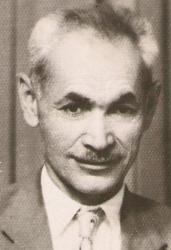
Victor Daley
 Australia
- Early Life and Education
- Voyage to Australia and Early Career
- Literary Influences and Pseudonym
- Literary Debut and Early Acclaim
- Celtic Influences and Social Commentary
- Personal Life and Death
- Legacy and Impact
Early Life and Education
Victor Daley, an Irish-born Australian poet, was born on September 5, 1858, in Navan, Ireland. His father, William John Daley, served in the British Indian Army, and his mother was Mary Jane Morrison. Daley received his education at the Christian Brothers School in Devonport, England. However, his academic pursuits were limited as he preferred to wander through the countryside and explore historical and cultural landmarks.
Voyage to Australia and Early Career
In 1878, Daley embarked on a journey to South Australia, where he had connections. However, he disembarked in Sydney and worked as a clerk while contributing to a local newspaper. In 1880, he ventured to Melbourne en route to New Caledonia, but after losing his funds, he abandoned his plans. He then pursued freelance journalism and writing in Melbourne and Sydney newspapers.
Literary Influences and Pseudonym
During his time in Melbourne, Daley formed a friendship with the writer Marcus Clarke. In Sydney, he met the prominent poet Henry Kendall. These encounters significantly influenced his literary style. Daley adopted the pseudonym "Cryve Roe" for his literary endeavors.
Literary Debut and Early Acclaim
Daley's early works were characterized by their lyricism and melancholy. They were published in the "Bulletin" magazine. In 1898, he released his first poetry collection, "At Dawn and Dusk," which was critically acclaimed. His subsequent anthologies, "Verse" (1908) and "Wine and Roses" (1911), were published posthumously.
Celtic Influences and Social Commentary
Daley's poetry embraced Celtic themes and the revolutionary spirit that permeated his Irish childhood. His satirical verse, often in ballad form, addressed socio-political issues but was not taken seriously during his lifetime. It gained recognition in the 1940s.
Personal Life and Death
Daley faced financial difficulties throughout his life. He married and had four children. In 1898, he succumbed to tuberculosis near Sydney, leaving his family destitute.
Legacy and Impact
Victor Daley's lyrical poetry, particularly from the 1880s to 1890s, made him a renowned figure in Australian literature. His Celtic influences and social commentary continue to resonate with readers today. Daley's work remains a significant contribution to the Australian literary landscape.