Vilmos Apor
 Hungary
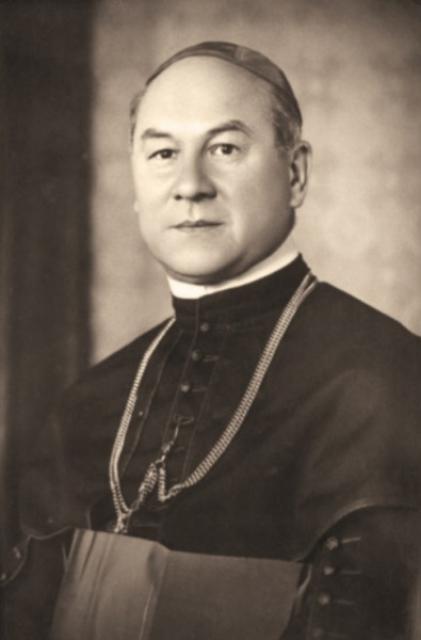
Vilmos Apor (February 29, 1892 – April 2, 1945) was a Hungarian Catholic bishop remembered for defending the poor and sheltering people endangered during World War II. As bishop of Győr, he gave refuge to civilians in the episcopal residence and protested the persecution of Hungarian Jews. He died after being shot while trying to protect women from Soviet soldiers near the end of the war. Pope John Paul II beatified him in 1997.
Early life and priesthood
Apor was born into a Catholic aristocratic family in Segesvár, then part of the Kingdom of Hungary and now Sighișoara, Romania. He studied at Jesuit schools and entered the seminary of the Diocese of Győr in 1910. He continued his theological studies in Innsbruck and was ordained a priest in 1915.
Apor served as a chaplain during the First World War before becoming a parish priest in Gyula. There he became known for his direct pastoral work and practical care for people in poverty. He supported charitable and social initiatives and maintained a particular concern for workers and vulnerable families.
Bishop of Győr
In 1941, Pope Pius XII appointed Apor bishop of Győr. The Second World War brought growing danger to Hungary, especially after the German occupation in March 1944. Apor spoke against the persecution and deportation of Hungarian Jews and appealed to government officials on behalf of those targeted. His residence and church institutions became places of refuge for people at risk.
As the Red Army approached Győr in the spring of 1945, Apor sheltered a large group of civilians, including women and girls, in the cellars of the episcopal residence. Accounts of the final days describe Soviet soldiers entering the building and attempting to take women away. Apor confronted them and tried to stop them from reaching the women.
Shooting and death
On Good Friday, March 30, 1945, Apor was shot by a Soviet soldier during the confrontation. He was taken for medical care and received the sacraments, but died from his wounds on Easter Monday, April 2, aged 53. His death was widely understood as the result of his effort to protect those who had sought shelter with him.
Beatification and legacy
Apor’s cause for beatification began after the war. Pope John Paul II beatified him in Rome on November 9, 1997, recognizing him as a martyr. His feast day is observed on May 23.
Apor is honored in Hungary as a bishop who put pastoral responsibility into practice under extreme conditions. His wartime appeals on behalf of Jews and his defense of women sheltering in Győr made him a symbol of moral courage and protection of civilians during occupation and military violence.