Vincenzo Dal Prato
 Italy
Italy- Biography of Vincenzo dal Prato
- Early Career
- Role in Mozart's 'Idomeneo, Re di Creta'
- Later Career and Mozart's Criticism
- Legacy and Death
Biography of Vincenzo dal Prato
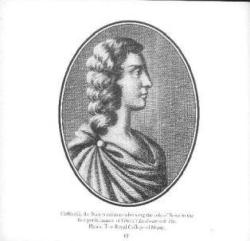
Vincenzo dal Prato, an Italian singer and soprano castrato, was born in 1756 in Imola, Italy. He was known for his incredible beauty, kind nature, and amiable character. Despite having a strong and beautiful voice, his performance style often received criticism for lacking artistry and stage presence. His most outstanding talent was considered to be his lyrical ability, and he particularly loved performing such roles himself.
Early Career
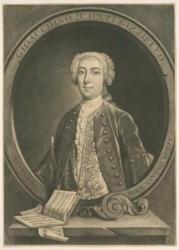
It is known that Vincenzo studied singing under the guidance of Lorenzo Gibelli, and he made his professional debut in 1777 in Fano. In the late 1770s, he was invited to perform in Stuttgart, Germany, before the Russian Crown Prince, later Tsar Paul I. This performance paved the way for him to stay in Munich from 1780 to 1805.
Role in Mozart's 'Idomeneo, Re di Creta'
Perhaps Vincenzo's most famous and criticized role is that of Idamante in Wolfgang Amadeus Mozart's opera 'Idomeneo, Re di Creta.' Interestingly, this opera is one of Mozart's earliest mature works. The premiere took place on January 29, 1781, in Munich, with Vincenzo singing the part of the king's son. Notably, in the subsequent Vienna production, Idamante was sung by a tenor instead of a soprano, which was originally intended in the Munich premiere. Mozart himself was extremely dissatisfied with Vincenzo's performance, and he generally had a complicated relationship with castrati, to say the least.
Later Career and Mozart's Criticism
Despite Mozart's criticism, Vincenzo remained in Munich for another quarter of a century, continuing his career. Throughout his life, he was somehow subjected to criticism from Mozart, who never forgave him for his portrayal of Idamante. In his letters to his father, Mozart repeatedly emphasized how bad Vincenzo was and even suggested that the sounds coming out of the singer's mouth could easily be produced by another orifice. Mozart continued to criticize him whenever they had to work together.
Legacy and Death
Nevertheless, Vincenzo dal Prato remained on the stage until old age and eventually received a pension. His work with Mozart was what brought him the most fame. He passed away in Munich in 1828.