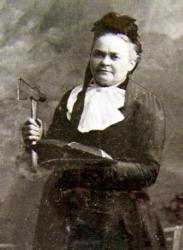
Vladimir Algasov
 Russia
- Early Life and Political Beginnings
- Internationalist Stance during World War I
- Emergence as a Left-Wing Leader
- Founding of the Left SR Party
- Split with the Bolsheviks
- Academic Career and Arrest
Early Life and Political Beginnings
Grigory Ivanovich Algasov, a prominent revolutionary figure, was born to a noble family in present-day Ukraine. His father served as a postal official. Algasov studied law at Kharkiv University but did not graduate. In 1903, he joined the Socialist Revolutionary Party (SR).
Internationalist Stance during World War I
During World War I, Algasov adopted an internationalist position, opposing Russian participation in the conflict. He became a member of the Kharkiv Soviet and its executive committee after the February Revolution of 1917.
Emergence as a Left-Wing Leader
Algasov emerged as a leader of the city's SR organization, known for its unwavering internationalism. As a delegate to the 3rd SR Congress, he criticized the party's participation in the Provisional Government, arguing that it should have been a socialist government led by Soviets.
Founding of the Left SR Party
After the Bolshevik Revolution, Algasov joined the left-wing opposition within the SR party. He played a key role in the founding of the Left SR Party (PLSR) and was elected to its Central Committee. He justified the Bolsheviks' use of force to suppress counterrevolutionary activity and predicted the inevitability of a civil war.
Split with the Bolsheviks
Algasov served as a Commissar of Internal Affairs in the coalition government but resigned in March 1918 due to his disagreement over the Treaty of Brest-Litovsk. He later joined the Russian Communist Party (Bolsheviks) after condemning the PLSR's involvement in the left-wing uprising against the Bolsheviks.
Academic Career and Arrest
During the Civil War, Algasov served in the Red Army. After the war, he pursued a career in academia. In 1938, he was arrested during the Great Purge and executed on charges of counterrevolutionary activity. He was eventually rehabilitated in 1957.