Bernard Bakana Kolelas
 Congo
Congo- Early Life and Education
- Political Activism
- Political Persecution and Incarceration
- Business and Political Resurgence
- Creating the MCDDI
- Electoral Success and Opposition
- Alliance with Lissouba and Mayorship
- Brief Premiership and Exile
- Criminal Conviction and Amnesty
- Election to Senate and Family Legacy
Early Life and Education
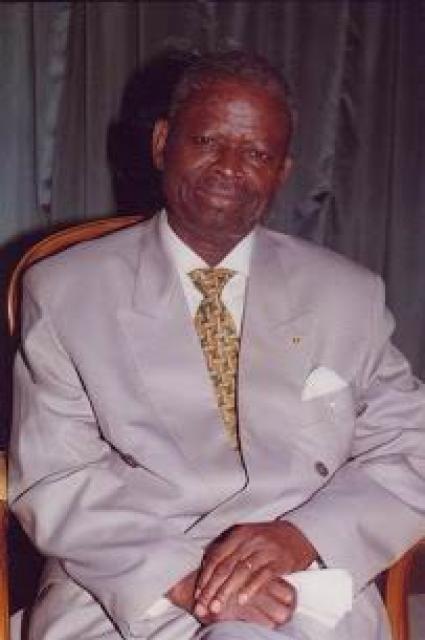
Bernard Kolelas, a Congolese politician, was born in 1933. He received a diverse education in medicine, psychology, and sociology, enriching his understanding of human behavior and societal dynamics.
Political Activism
In 1958, Kolelas became a member of the youth wing of the "Democratic Union for the Defense of African Interests." His political activism continued in 1961 when he became the Director-General of the Congolese Foreign Ministry, a position he held until 1963 after completing an internship in France.
Political Persecution and Incarceration
In 1968 and 1969, Kolelas faced political persecution and arrests under President Marien Ngouabi, accusing him of plotting against the government. He spent years in prison until his release in 1975.
Business and Political Resurgence
After his release, Kolelas remained outside the government, engaging in modest commercial activities for survival. In 1978, he was accused of plotting a coup against then-President Jacques Joachim Yhombi-Opango. However, upon his overthrow, the new leader, Denis Sassou-Nguesso, pardoned all those accused of the conspiracy, including Kolelas.
Creating the MCDDI
From 1982 to 1989, Kolelas lived in his hometown, largely withdrawn from public life. However, in 1989, he founded the Congolese Movement for Democracy and Integral Development (MCDDI), which played a crucial role in the country's 1990 transition to a multi-party system.
Electoral Success and Opposition
In the 1992 presidential elections, Kolelas emerged as a leading opposition figure, finishing second and capturing over a third of the votes. This solidified his position as a prominent political voice in Congo.
Alliance with Lissouba and Mayorship
From 1994, Kolelas forged an alliance with President Pascal Lissouba, and several MCDDI members received ministerial appointments. Kolelas also served as Mayor of Brazzaville from 1994 to 1997.
Brief Premiership and Exile
In September-October 1997, Kolelas served as Prime Minister of Congo. However, Deni Sassou-Nguesso's victory in the ensuing conflict forced him to flee the country.
Criminal Conviction and Amnesty
In 2000, Kolelas was sentenced in absentia for war crimes, including rape and arbitrary detention, allegedly committed during the civil war. In late 2005, he was granted amnesty by the Sassou-Nguesso government and returned to his homeland.
Election to Senate and Family Legacy
In 2007, Kolelas was elected to the Senate, while two of his sons were elected to the National Assembly of the Republic of Congo. Kolelas's political influence and legacy continue to be felt in the Democratic Republic of the Congo.