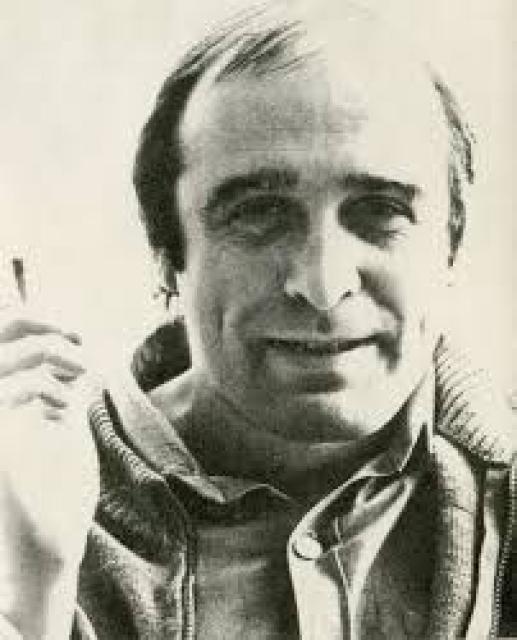
Vladimir Kormer
Early Life and Education
Victor Borisovich Kormer was born at Reshoty Station in the Krasnoyarsk Territory, Russia. His father, a "disenfranchised" individual, was prohibited from living in Moscow or any regional centers. After his father's death in 1943, the family returned to Moscow. In 1963, Kormer graduated from the Faculty of Informatics at the Moscow Institute of Physics and Technology (MIPT).
Career
After graduating, Kormer worked at the Computing Center, the Central Economic-Mathematical Institute, and the Institute of Sociology. He also served as the head of the Foreign Philosophy Department at the editorial office of the journal "Voprosy Filosofii" for a decade. In 1980, he became a member of the unofficial "Club of Novelists."
Literary Career
Kormer's literary career began with his debut novel, "Tales of an Accidental Family." However, it was not published at the time. His novel "The Mole of History, or Revolution in the S=F Republic" earned him the V.I. Dal Prize in Paris in 1979 and was published in Russian, French, and Italian. This attracted the attention of the KGB, forcing Kormer to resign from "Voprosy Filosofii." He subsequently relied on ghostwriting to support himself and endured numerous searches and interrogations until his death.
Magnum Opus
Kormer's masterpiece, "The Heritage," explored the spiritual struggles of the Moscow intelligentsia in the twilight of the Soviet era. It examined the transmission of spiritual values from pre-Soviet intellectuals and émigrés to their modern-day counterparts.
Collaboration and Legacy
Towards the end of his life, Kormer collaborated with Vladimir Kantor and Yuri Dikov on a screenplay and book about Nikolai Chernyshevsky. Kantor's novel "The Crocodile" (1990) was dedicated to Kormer's memory. Much of Kormer's writing was published posthumously. In 2009, the publishing house "Vremya" released a two-volume collection of his major works on the occasion of the 70th anniversary of his birth.
Literary Analysis
Kormer's prose sought to analyze the metaphysics of Russian culture and history. In "The Mole of History," he depicted the self-destructive forces of communism through the fate of a Soviet intellectual tasked with organizing a socialist revolution in a South American republic. In "The Heritage," he delved into the unresolved issues of Russian history and the unique traits of Russian thought and behavior, highlighting the suppression of individuality by group mentality. Through his work, Kormer affirmed the paramount importance of human freedom over any form of party dictatorship.