Vladimir Kovalevsky
- Early Life and Education
- Military Service and Resignation
- Involvement in Student Radicalism
- Acquittal and Return to Academics
- Scientific and Literary Work
- Government Service
- Promotion and Reforms
- Political Troubles
- Later Life and Legacy
Early Life and Education
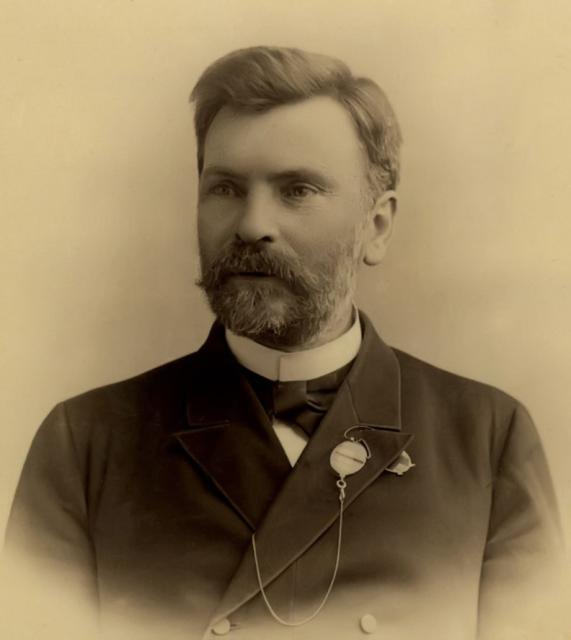
Vladimir Ivanovich Kovalevsky was born on 9 November 1848, in Novo-Serpukhov, Kharkov Governorate, Russia, into a landowning family of modest means. He was raised in the Poltava Military Gymnasium and later attended the 2nd Konstantinovsky Military School in 1865.
Military Service and Resignation
In 1867, Kovalevsky was commissioned as a second lieutenant in the 154th Derbent Infantry Regiment and served in the Caucasus. He resigned from military service in 1868 and enrolled in the St. Petersburg Agricultural Institute, where he was taught by the renowned agronomist Dmitry Lachinov.
Involvement in Student Radicalism
During his studies, Kovalevsky became involved in student unrest and acquainted himself with the populist revolutionary Sergei Nechaev. In 1869, he provided shelter to Nechaev, who had murdered a fellow student. This led to Kovalevsky's arrest and imprisonment in the Peter and Paul Fortress from 1870 to 1871.
Acquittal and Return to Academics
On 22 August 1871, Kovalevsky was acquitted of charges of conspiracy and freed from prison. However, he was barred from holding government positions and remained under police supervision. He eventually returned to the St. Petersburg Agricultural Institute and graduated in 1875 with a dissertation on yeast fermentation.
Scientific and Literary Work
From 1874 onwards, Kovalevsky engaged in scientific research and published articles and translations in agricultural journals. In 1879, he collaborated with Ivan Levitsky on a statistical study of dairy farming in Russia.
Government Service
In 1879, Kovalevsky was appointed to the Statistical Department of the Department of Agriculture and Rural Industry. His contributions included mapping soils across European Russia and initiating statistical yearbooks on crop yields.
Promotion and Reforms
In 1882, Kovalevsky became a member of the Agricultural Scientific Committee. In 1884, he joined the Ministry of Finance as a vice-director in the Department of Direct Taxes. He played a significant role in abolishing the poll tax, reforming land taxes, and introducing tax inspection.
Political Troubles
However, in 1886, Kovalevsky was forced to resign from his post due to political concerns raised by the Minister of Internal Affairs. After the resignation of the Finance Minister, he was appointed to a special assignment in the Ministry of Finance.
Later Life and Legacy
From 1900 to 1902, Kovalevsky served as Deputy Minister of Finance. He also became chairman of the Russian Technical Society from 1906 to 1916. He played a key role in establishing the St. Petersburg Polytechnic Institute and the State Institute of Experimental Agronomy in Leningrad. Kovalevsky left a lasting legacy in agriculture, economics, and education.