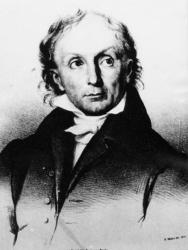
Vladimir Lesevich
 Ukraine
- Childhood and Education
- Military Service and Involvement in Social Movements
- Return to St. Petersburg and Philosophical Work
- Shift towards Epistemology and Positivism
- Social Philosophy and the Role of Science
- Recognition and Legacy
Childhood and Education
Valerian Ivanovich Lesevich was born on January 15, 1837, in the village of Denisovka, Poltava Governorate, Russian Empire. After completing his studies at the Saint Petersburg Military Engineering School, he enrolled in the Academy of the General Staff.
Military Service and Involvement in Social Movements
Lesevich served in the army in the Caucasus region. In the 1860s, he became active in the social movement and contributed to journals such as "Otechestvennye Zapiski" and "Vestnik Evropy." His connections to the Narodnik movement led to his exile in Siberia from 1879 to 1888.
Return to St. Petersburg and Philosophical Work
Upon his return to St. Petersburg, Lesevich resumed his writing career. He became a prominent contributor to the magazine "Russkoye Bogatstvo." Early in his philosophical writings, he advocated the ideas of positivism (particularly Auguste Comte), Ludwig Feuerbach, and Peter Lavrov. He aimed to promote scientific and rational ideals within the culture.
Shift towards Epistemology and Positivism
Lesevich later shifted his focus to epistemology, arguing that it had been neglected by early positivists. He embraced the critical methods of the second wave of positivists, such as Richard Avenarius, Alois Riehl, and Karl Göring. He believed that positivism had developed a theory of "pure experience" that could challenge traditional philosophical views of knowledge and its origins.
Social Philosophy and the Role of Science
Lesevich also devoted considerable attention to social philosophy, advocating for the use of positivism in sociological theory. He divided sociology into social statics (studying societal organization) and social dynamics (examining the evolution of societies). He believed that scientific advancement was the primary driver of social progress.
Recognition and Legacy
Valerian Ivanovich Lesevich passed away in Kiev on November 13, 1905. He left behind a significant body of work that contributed to the development of positivism in Russia. His ideas continue to resonate with scholars and philosophers today, as they explore the intersection of science, philosophy, and social progress.