Vladimir Shuko
- Russian Architect and Theatrical Decorator
- Early Life and Training
- International Recognition
- Architectural Maturity
- Architectural Reinterpretation
- Theater Design
- Legacy and Influence
- Notable Works
- Monument to Lenin, Leningrad (1926)
Russian Architect and Theatrical Decorator
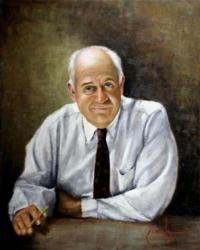
Vladimir Alekseyevich Shchuko (1878-1939) was a renowned Russian architect, theatrical designer, and educator. His architectural contributions are characterized by their eclecticism, marrying classical and modernist styles, and his theatrical work was equally innovative and influential.
Early Life and Training
Born in 1878 in Tambov, Shchuko moved to Saint Petersburg in 1896 to study architecture at the Academy of Arts under Leon Benois. He excelled in the visual arts, studying painting and sculpture under renowned artists such as Ilya Repin and Vladimir Beklemishev. Shchuko's talent extended beyond architecture; he was musically gifted and also had a passion for acting, which led him to the Moscow Art Theatre.
International Recognition
Shchuko's architectural career took off in 1910 when he was commissioned to design Russian pavilions for the international exhibitions in Rome and Turin. Inspired by Russian classicism and Palladianism, the pavilions were a resounding success, earning him international recognition and the title of Academician of Architecture.
Architectural Maturity
Shchuko's architectural style evolved throughout his career. His early works, including the доходные дома (apartment buildings) on Kamennoostrovsky Prospekt in Saint Petersburg, showcased his mastery of classical orders and spatial composition. He continued to incorporate classical elements in his subsequent designs, such as the Kiev Zemstvo Uprava and the State Library of the USSR in Moscow.
Architectural Reinterpretation
After the Russian Revolution, Shchuko embraced a more modernistic approach in his architecture. He collaborated with Vladimir Gelfreich on iconic projects such as the Triumphal Arch of the All-Russia Agricultural Exhibition in Moscow (1923). Shchuko's adaptation of classical forms to contemporary contexts, as seen in the monument to Lenin in Leningrad (1926), is particularly notable.
Theater Design
Shchuko's deep involvement in theater extended beyond architecture. He designed stage sets for various productions, including numerous performances at the Leningrad Academic Theaters. His theatrical sketches demonstrate his artistic range, from detailed renderings to expressive gestural drawings.
Legacy and Influence
Shchuko passed away in 1939, leaving behind a remarkable legacy in both architecture and theater. His ability to fuse the past and present, experimenting with different artistic styles and techniques, continues to inspire architects and designers today.
Notable Works
Russian pavilions at the Rome and Turin exhibitions (1910)доходные дома on Kamennoostrovsky Prospekt, Saint Petersburg (1910)
Kiev Zemstvo Uprava (1913-1915)
State Library of the USSR, Moscow (1928-1941)
Triumphal Arch of the All-Russia Agricultural Exhibition, Moscow (1923)
Monument to Lenin, Leningrad (1926)
Rostov-on-Don Dramatic Theater (1933-1936)House of the People's Commissariat of Heavy Industry, Moscow (1936)
Bolshoi Kamenny Bridge, Moscow (1937)
Main Pavilion of the All-Union Agricultural Exhibition, Moscow (1939)