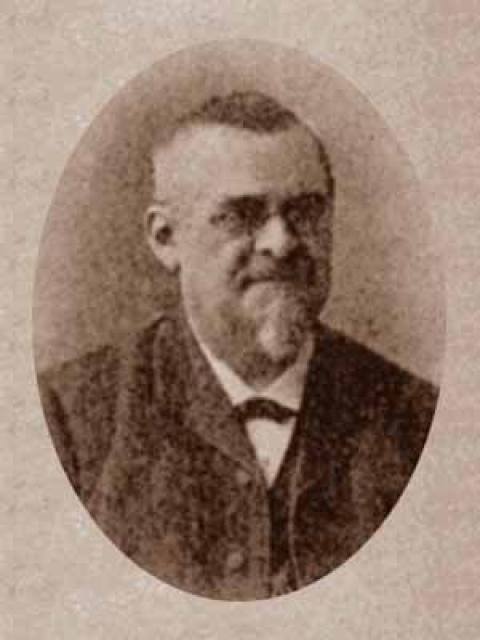
Vladimir Spasovich
 Russia
- Early Life and Education
- Scholar of Criminal Law
- A Celebrated Courtroom Advocate
- Literature and Polish-Russian Exchange
- Final Years and Legacy
Vladimir Spasovich was a prominent nineteenth-century lawyer, legal scholar and literary critic whose work crossed the cultural worlds of Russia and Poland. Born in the western provinces of the Russian Empire and raised in a Polish-speaking household, he became one of the era’s most celebrated courtroom advocates while also writing influential studies of law and Slavic literature. His career reflected a persistent effort to make legal debate more rigorous and to encourage greater understanding between Russian and Polish intellectual life.
Early Life and Education
Spasovich was born on 29 January 1829 in Rechitsa, in what was then Minsk Governorate and is now Belarus. He came from a mixed family with Polish cultural ties; his father was a physician, and Polish was used at home. Spasovich attended the Minsk Gymnasium, graduating with distinction in 1845, and went on to study law at the University of St Petersburg.
After completing his degree in 1849, he entered legal and academic work. His early research addressed international law, including neutral shipping, and he later wrote on property rights in historical Polish law. These subjects helped establish him as a scholar attentive both to legal theory and to the varied legal traditions within the Russian Empire.
Scholar of Criminal Law
Spasovich taught at several institutions in St Petersburg and in 1857 became an assistant professor of criminal law at the university. His major work, A Textbook of Criminal Law, presented new and comparatively informed ideas about criminal justice. The work was widely debated, and its liberal positions brought official scrutiny. By 1864 he had been removed from teaching posts under the Ministry of Education, closing the academic career he had hoped to pursue.
The experience redirected his energy toward publishing and legal practice. He continued writing about the theory of evidence, criminal procedure, copyright and the proper relationship between courts and the state. He argued for the importance of a genuine balance between prosecution and defense, insisting that an accused person needed a capable advocate against the power of the state.
A Celebrated Courtroom Advocate
Following Russia’s judicial reforms, Spasovich joined the new bar in St Petersburg in 1866. He became known for his careful preparation, wide learning and forceful courtroom arguments. Over the next decades he represented clients in major criminal and political cases, earning a reputation as one of the leading advocates of the empire. His speeches drew on law, history, ethics and psychology, and contemporary writers praised their clarity and breadth.
The courtroom also became a place where literature and public life met. Spasovich could bring references to literature into a legal argument, using familiar works to illuminate character and motive for a jury. His stature later inspired the character of the lawyer Fetyukovich in Fyodor Dostoevsky’s The Brothers Karamazov, a fictional portrayal that reflected how famous advocates had become in Russian public culture.
Literature and Polish-Russian Exchange
Alongside his law work, Spasovich became an important literary historian and critic. With Alexander Pypin, he contributed to a survey of Slavic literature and wrote a major history of Polish literature. He also published essays on Adam Mickiewicz, Alexander Pushkin, Mikhail Lermontov and other writers, often examining the connections between Polish and Russian traditions. He saw literary study as a way to explain Polish culture to Russian readers and to challenge mutual prejudice.
Spasovich took part in the liberal intellectual press, helped create literary and political journals, and supported the publication of Polish writing in the Russian Empire. He sought a path of reform through public debate and legal means, rather than revolutionary violence. His position was not without controversy: critics in both Polish and Russian circles challenged his political caution and his ideas about cultural cooperation.
Final Years and Legacy
In later life, Spasovich gradually withdrew from courtroom practice and devoted more time to writing and civic activity. He moved to Warsaw in 1902 and died there on 26 October 1906, aged 77.
His legacy lies in the breadth of a career that joined legal scholarship, advocacy and literary criticism. He helped shape modern criminal-law discussion in Russia, defended the role of the advocate in a reformed court system and wrote across the cultural boundary between Poland and Russia. Remembered as both a legal thinker and a public intellectual, Spasovich used the courtroom and the printed page to argue for reasoned debate, individual rights and a more informed understanding of neighboring cultures.




