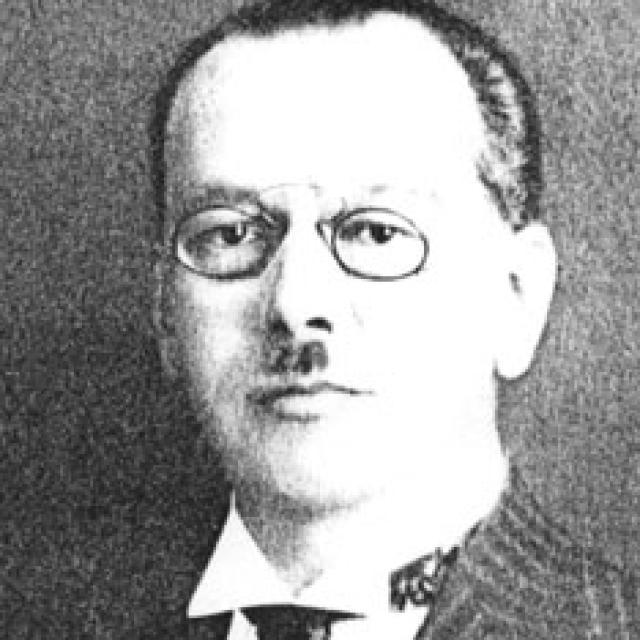
Vladimir Tukalevskiy
- Vladimir Nikolaevich Tukalevsky: A Life of Service and Tragedy
- Career and Service
- Tragic Turn
- Health Problems and Death
- Legacy
Vladimir Nikolaevich Tukalevsky: A Life of Service and Tragedy
Early Life and EducationBorn in Poltava in 1881, Vladimir Nikolaevich Tukalevsky was an intelligentsia of prerevolutionary education. While pursuing degrees at the University of Kyiv and Polytechnic Institute, his studies were interrupted by student unrest. He went on to work in journalism and publishing before enrolling in the history and philology department of St. Petersburg University, graduating in 1911.
Career and Service
In St. Petersburg, Tukalevsky worked in the Department of Small Loans, promoting the cooperative movement. He published several books on Russian history and scientific works before joining the Bolshevik cause. He participated in the All-Russian Cooperative Congress in 1917 and became editor of the journal "Vestnik Kooperativnogo Kredita."
After the October Revolution, Tukalevsky faced arrest and imprisonment. He escaped to Finland in 1918, where he established a Russian school and worked as an agent for "Political News" and as a correspondent for Western European journals. In 1923, his family relocated to Prague, where he found work as the director of the Russian Library of the Czech Foreign Ministry.
Tragic Turn
Tukalevsky's life took a tragic turn in 1936 when he was falsely accused of being a Gestapo agent by Valentin Olberg, a defendant in the Moscow Trials. Despite Tukalevsky's explanations and attempts to clear his name, he was dismissed from his position and banned from the Slavic Library.
Health Problems and Death
Soon after the accusations, Tukalevsky developed severe intestinal pain. Surgery revealed a malignant tumor that proved fatal. His death at 55 raised suspicions in the Czech press.
Legacy
Tukalevsky's legacy is a complex one. Some in the émigré community viewed him as a pro-Soviet sympathiser, while others believed he genuinely tried to serve his country. The full extent of his involvement with Soviet intelligence remains unknown, but it is evident that he fell victim to the political machinations of the time.
Despite the controversy surrounding his death, Tukalevsky's contributions to Russian literature and culture, particularly through his work at the Slavic Library, cannot be overlooked. His dedication to the written word and his pursuit of knowledge left an enduring legacy.