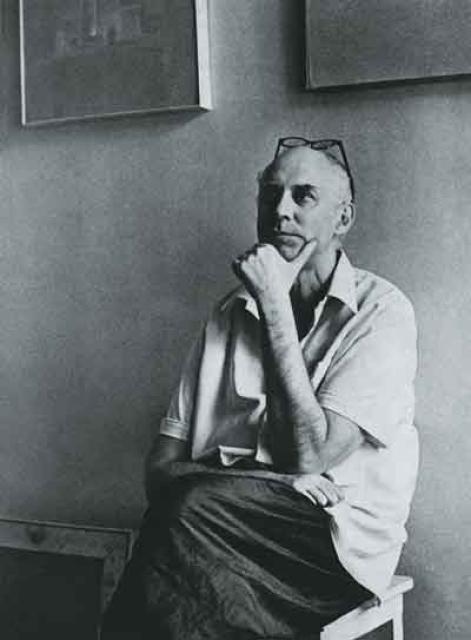
Vladimir Veisberg
- Childhood and Education
- Teaching Career
- Artistic Style
- Subject Matter and Techniques
- Legacy
- Psychological Struggles
Childhood and Education
Vladimir Grigorievich Weisbergwas a Russian artist and art theorist. He was born on May 29, 1924, in Moscow to Grigory Petrovich Weisberg, a teacher and psychologist, and Maria Yakovlevna Weisberg, a librarian. From 1943 to 1948, Weisberg studied at the All-Union Central Council of Trade Unions (VCSPS) studio under artist Sergei Nikolaevich Ivanishev-Musatov and later attended the workshop of Alexander Alexandrovich Osmerkin. He also enrolled in Vitaly Yakovlevich Sitnikov's "home academy."
Teaching Career
From 1959 to 1984, Weisberg taught painting at the studio of the Institute for Advanced Training of the Union of Soviet Architects. From 1964 to 1966, he taught at the Moscow Television courses. In 1961, Weisberg became a member of the Union of Artists of the USSR.
Artistic Style
Weisberg pursued an artistic style he termed "invisible painting," characterized by subtle gradations and absence of recognizable forms. He achieved this effect through the use of "white on white" technique, where "white" consisted of numerous barely discernible color particles. Weisberg believed that true harmony emerged from the gradual perception of an almost invisible light.
Subject Matter and Techniques
From 1962 onwards, Weisberg began incorporating plaster figures, primarily geometric, into his paintings. This theme became a recurring motif throughout his career. Despite his abstract style, Weisberg also captured scenes of everyday life, depicting the courtyards and alleyways of his beloved Arbat neighborhood. His drawings in this genre exhibited a classical quality reminiscent of old masters.
Legacy
Weisberg died in Moscow on January 1, 1985. His remains were interred at the Vvedenskoye Cemetery. Posthumously, he gained recognition for his groundbreaking contributions to contemporary art. Much of his work is held in private collections outside of Russia.
Psychological Struggles
Vladimir Nemukhin, in his "Monologues," described Weisberg as "a man with a tormented soul." He suffered from mental illness, which some attributed to his artistic sensitivity. Together with Vladimir Yakovlev and Anatoly Zverev, Weisberg challenged the prevailing notion of mental illness as a hindrance, instead asserting it as a gateway to a deeper understanding of existence.