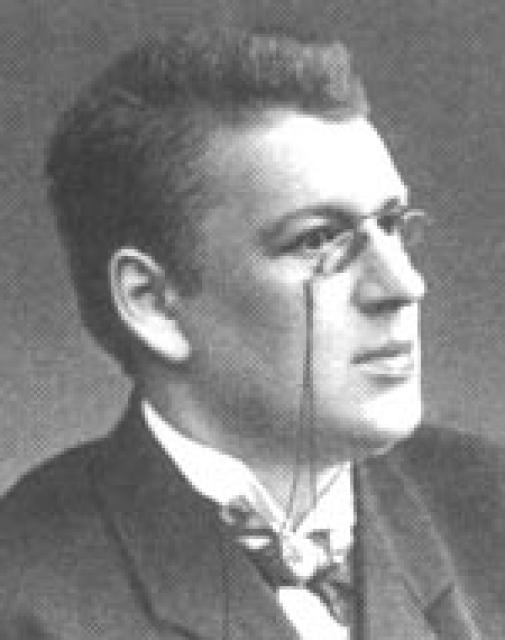
Vlas Doroshevich
 Russia
- Vladislav Doroshevich: The King of the Feuilleton
- The "Short Line" and Political Influence
- Voyages and Literary Contributions
- The "Short Line" and Its Impact
- The Skitsky Brothers Case and "Russkoye Slovo"
- Later Career and Legacy
Vladislav Doroshevich: The King of the Feuilleton
Early Career and Rise to ProminenceVladislav Doroshevich, a prominent Russian journalist, publicist, and theatrical critic, began his journalistic career as a student at a Moscow gymnasium. He debuted as a reporter for "Moskovsky Listok" and "Peterburgskaya Gazeta" before contributing humorous articles to "Budilnik." His reputation surged during his tenure at Odessa newspapers in the 1890s, where his incisive and satirical feulletions on local issues gained him notoriety.
The "Short Line" and Political Influence
Doroshevich's articles were distinctive for their "short line," a style characterized by short, aphoristic phrases that avoided subordinate clauses. This bold technique resonated with readers, establishing him as a fearless critic of provincial society and raising concerns among authorities who viewed him as a dangerous publicist. Despite his reputation, Doroshevich never embraced radical liberalism, remaining a moderate in politics.
Voyages and Literary Contributions
In 1897, Doroshevich embarked on a journey to the East, resulting in his influential work "Sakhalin," which exposed the horrors of penal colonies on the island. However, despite its initial impact, the book's superficial observations led to its decline in popularity.
In 1899, Doroshevich co-founded "Rossiya," a large political newspaper, alongside Amphiteatrov and Sazonov. Characterized by its sensationalism and blend of liberal and nationalistic rhetoric, the newspaper's feulletions, written by Doroshevich, were highly controversial but often more aggressive in tone than substance.
The "Short Line" and Its Impact
Doroshevich's "short line" technique gained him a wide following among bourgeois readers and inspired imitators among provincial feulletonists. However, its popularity also led to a proliferation of empty and verbose articles by incompetent writers who exploited its simplicity.
The Skitsky Brothers Case and "Russkoye Slovo"
Doroshevich made a significant contribution by advocating for the Skitsky brothers, who were wrongly convicted by a Poltava court. His campaign exposed judicial flaws and led to their acquittal. After "Rossiya" was shut down, Doroshevich joined the Moscow newspaper "Russkoye Slovo," where he remained editor until its closure in 1918.
Later Career and Legacy
Under Doroshevich's leadership, "Russkoye Slovo" became widely popular, and he emerged as a beloved feulletonist among Moscow's merchants and bourgeoisie. Drawing on his extensive travels and firsthand knowledge of merchant society, Doroshevich's feulletions continued to provoke discussion while gradually losing their political edge.
Doroshevich's role in journalism diminished after 1905 due to his ambiguous political stance. Nonetheless, his legacy as a master of the feuilleton endured. His works were published in several editions, including "Papilotki" (1893), "Odessites" (1895), and "Legends and Tales of the East" (1902).