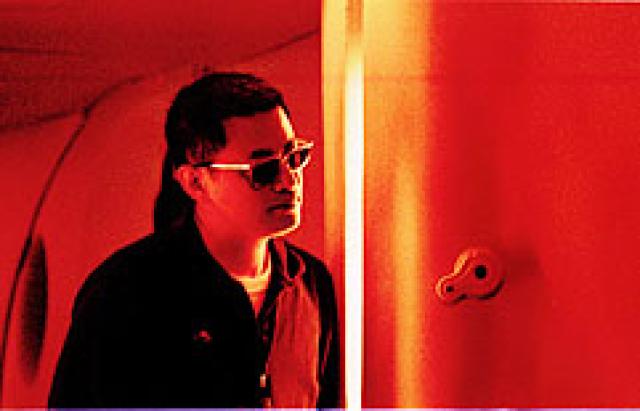
Vong Kar-Vay
 China
China- Early Life and Family
- Education, Career Beginnings, and Personal Life
- Filmmaking Career
- Critical Acclaim with "Chungking Express" and "Fallen Angels"
- International Recognition and Commercial Success
- Return to Directing and Recent Projects
- Current Projects and Legacy
Early Life and Family
Wong Kar-wai was born in Shanghai in July 1958, to a middle-class Chinese family as the youngest of three children. His early years were marked by the Chinese Cultural Revolution, which swept across Asia in the 1960s. In search of a better life, his father, a merchant marine sailor, and his mother, a housewife, arranged for their children to be sent to Hong Kong.
Circumstances made Wong the only one of his siblings to receive permission for the move, resulting in a decade-long separation from his family. They eventually settled in the affluent Yau Tsim Mong district, where his father found work as a nightclub manager under British colonial rule. Nonetheless, the Mandarin-speaking Wong felt isolated and immersed himself in learning modern English.
Through childhood visits to cinemas with his mother, he developed a keen interest in foreign films and was profoundly influenced by them.
Education, Career Beginnings, and Personal Life
Adapting to Hong Kong's multicultural society, Wong excelled in school, particularly in the arts while also showing a fascination for technology. He quickly mastered computers, setting his sights on a career in graphic design, which he pursued for a decade. After graduating from the prestigious University of Hong Kong in 1980, he secured an internship at a local television production company. Working alongside veteran media professionals, he quickly gained their trust and became part of the progressive circle.
In his early adulthood, he wrote scripts for popular TV dramas and feature films, handling a diverse range of genres, which earned critical and commercial success. Regarding his personal life, little is known about Wong Kar-wai's wife, identified as Esther. The filmmaker has remained private about the matter, with his family respecting his stance. However, it is known that they have a son named Qing. Appearances at official events suggest that he often attends them alone.
Filmmaking Career
Early Films and Independent ProductionIn the late 1980s, Wong transitioned to directing films, initially focusing on crime thrillers and triad actioners. His debut feature, "As Tears Go By" (1988), explored the lives and antics of young gangsters.
Wong's second film, "Days of Being Wild" (1990), starring Andy Lau, Leslie Cheung, and Rebecca Pan, was released by Hong Kong's Cinema City. The actors' performances and Wong's atmospheric direction caught the attention of international audiences.
Despite receiving limited commercial success, the film has since become a cult classic. In partnership with producer Jeff Lau, Wong established his independent film company, setting the stage for his future success.
Critical Acclaim with "Chungking Express" and "Fallen Angels"
After two years of work, Wong's "Ashes of Time" (1994), a wuxia adventure, premiered at the Venice Film Festival. Despite mixed reviews, Wong persevered, crafting "Chungking Express" (1994). The two-part film about police officers garnered international acclaim, heralding Wong's unique and imaginative style.
Released in the United States, the film attracted a cult following for its dreamlike quality and eccentric characters seeking answers to life's questions. A contrasting style was showcased in "Fallen Angels" (1995), a crime thriller exploring the darker side of Hong Kong's criminal underworld. The same year, Wong's "Happy Together" was released, becoming arguably his most acclaimed work of the 1990s.
The queer love story was screened at the Cannes Film Festival, winning Wong the Best Director award and receiving widespread critical praise for its cinematography, editing, score, and performances.
International Recognition and Commercial Success
The early 2000s marked the peak of Wong's popularity, with "In the Mood for Love" (2000) consistently ranking among the greatest films ever made. The film's director's cut later emerged as a testament to Wong's meticulous approach to filmmaking.
"2046" (2004) pushed the boundaries of narrative and time, presenting a complex and thought-provoking film that explored the past, present, and future. The film's challenging themes and production delays led Wong to take an extended break from filmmaking.
Return to Directing and Recent Projects
During this hiatus, Wong filmed the short "Eros" (2004), which explored human sexuality. In the late 2000s, he returned to feature filmmaking with "My Blueberry Nights" (2007) and a commercial for Dior. Both projects, embracing an arthouse aesthetic, premiered at international festivals and cinemas worldwide.
Wong then embarked on "The Grandmaster" (2013), a biopic of Bruce Lee's martial arts master. Set against the backdrop of war-torn China and other historical conflicts, it marked Wong's most commercially successful film.
After years of production delays due to injuries sustained by lead actor Tony Leung Chiu-wai, the film received critical acclaim and two Academy Award nominations.
Current Projects and Legacy
In recent years, rumors have surfaced of Wong Kar-wai's involvement in various television and film projects. A multi-episode crime drama set in San Francisco is in the works, but its status remains uncertain.
"Blossom" and the 20th-anniversary edition of "In the Mood for Love" are also slated for release in the mid-2020s. In interviews, Wong has expressed his unwavering passion for filmmaking, promising to continue pursuing his craft, much to the delight of countless cinephiles.
Wong Kar-wai's unique style, characterized by slow-paced, atmospheric storytelling, stylized visuals, and an emphasis on melancholy and romantic longing, has left an indelible mark on the film industry. His films have garnered international acclaim, cementing his status as one of the most influential and celebrated contemporary filmmakers.


