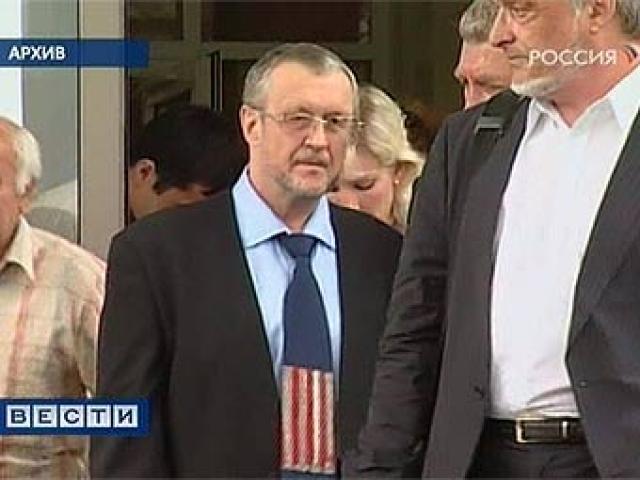
Vyacheslav Ivankov
 Russia
Biography of Vyacheslav Ivan'kov (Yaponchik)
Vyacheslav Kirillovich Ivan'kov, also known as Yaponchik, was born in Moscow on January 2, 1940. He was a prominent figure in the criminal underworld, known as a "thief in law" or a "vor v zakone." Ivan'kov had various criminal aliases, including Yaponchik, Yaponets, Ded (Grandfather), and Assiriyskiy zyat (Assyrian son-in-law).

Throughout his life, Ivan'kov had multiple run-ins with the law. He was convicted in 1974 under Article 196, Part 2.3 of the Criminal Code of the RSFSR, in 1976 under Article 145, Part 2 and Article 191, Part 2 of the Criminal Code of the RSFSR, which led to his forced treatment in a psychiatric hospital in Smolensk, and in 1982 under Article 146, Part 2 (subparagraphs a, b), Article 218, Part 1, and Article 196, Part 1 of the Criminal Code of the RSFSR, resulting in a 14-year sentence in a high-security colony. He was also convicted in 1986 under Article 193, Part 2 of the Criminal Code of the RSFSR, and in 1988 under Article 110 of the Criminal Code of the RSFSR. These articles covered offenses such as using forged documents, robbery with violence, assault on a police officer's life, armed robbery committed in collusion with a group of individuals, illegal possession of weapons, threatening violence against a citizen performing public duties, and intentional grievous bodily harm.
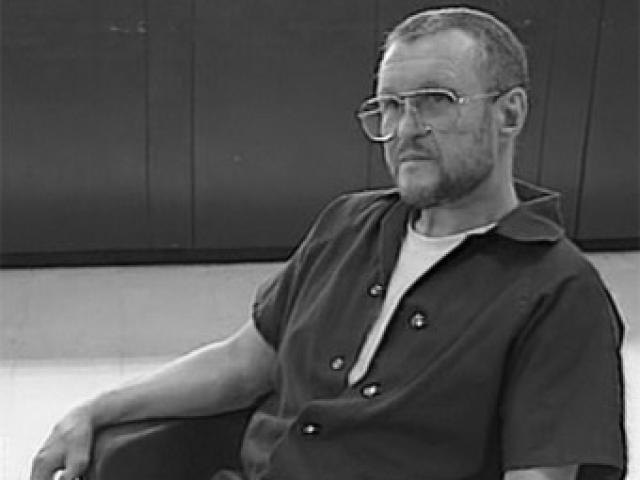
In 1991, the Supreme Court reduced Ivan'kov's sentence, and in November of the same year, he was released on parole. He then traveled to the United States in March 1992. On June 8, 1995, Ivan'kov, along with several others, was arrested by the FBI on charges of extorting 3.5 million dollars from two Russians living in America. In 1997, Yaponchik was sentenced to 9 years and 7 months in prison. On July 13 of that year, after completing his sentence, he was extradited to Moscow and taken to the Matrosskaya Tishina remand prison.

There are more myths than truths surrounding Ivan'kov's life. Even his nickname, Yaponchik, and its origin have been distorted. Initially, he was known as Yaponets due to his distinctive slanted eyes, and later, he was also called Yaponchik in reference to the famous Misha Yaponchik. He believes that the media, which he refers to as the "mass deception media," ruined his life. However, without the media, he would not have achieved such universal fame. Differentiating between myths and reality in Ivan'kov's life is challenging. When he was sentenced to nearly 10 years in prison in the United States, and those years seemed like an eternity, many former police officers began claiming that they had arrested the all-powerful Yaponchik. Over time, their numbers grew, resembling a brotherhood of old Bolsheviks who carried the burden alongside Lenin. Those who truly "worked" on Ivan'kov do not provide public comments or disclose their names. However, I have had the opportunity to communicate with many of them and see authentic documents. Vyacheslav Kirillovich and his surroundings are extremely cautious. Therefore, the information provided by his close associates is particularly intriguing. Although their assessments are often subjective. Sergey Khazarov recounts his acquaintance with Vyacheslav since September 29, 1970. Khazarov worked in an Armenian road construction brigade and was introduced to Ivan'kov by his uncle, a shoe designer. They became friends. Khazarov claims to have been present during almost all the incidents that led to criminal charges. One of the notable incidents was a brawl at the Rus' restaurant in March 1974. Ivan'kov, Khazarov, their acquaintance Asaf Sosunov, and the Armenian "thief in law" Gaik Gevorkyan, also known as Goga Yerevanskiy or Goga Unzhlag, went to the suburban restaurant Rus'. It was the only restaurant open all night and was popular among affluent guests, including foreigners who frequented it with foreign prostitutes, as well as the gold youth, with Galina Brezhneva often visiting. A fight broke out between Ivan'kov's group and a group of individuals at a neighboring table. The other group consisted of Vitol'd Gernik, a six-time convicted individual with the same nickname as the famous criminal Gennadiy Korkov, known as Mongol, Goga Dgebuzde, also known as Goga Tbilisskiy, and several Georgian bandits. The brawl started when Dgebuzde persistently invited a woman to dance with him, even though she was already dancing with Ivan'kov. She refused, but the audacious Goga stuck a 100-ruble bill twisted like a hairpin in her hairstyle. A fight ensued, similar to those in cowboy movies, involving improvised weapons and furniture. Someone hit Ivan'kov on the head with a bottle. Asaf Sosunov then pulled out a gun and shot Dgebuzde twice. Gernik, or Mongol, knocked the gun out of Asaf's hands with a chair. An attendant picked up the gun, so it was not found during the investigation. The Voice of America reported the next day about the "shootout between Russian gangsters," which was a sensation in 1974, immediately contradicted by our official propaganda. All participants, except Asaf, were soon apprehended. Sosunov, who was then wanted, was arrested later. Interestingly, the head of the operation to apprehend Ivan'kov's associate was Mikhayl Shestopalov, a former operative who, after retiring, became the head of security for Yukos. Many years later, Vyacheslav Ivan'kov occupied a cell in the Matrosskaya Tishina remand prison, where Mikhail Khodorkovsky, Shestopalov's former boss, had been imprisoned. The best cell in the remand prison was allocated for Yaponchik, while the disgraced oligarch was held in a cell just next door. The fight at the Rus' restaurant caused a significant uproar, and it is not surprising that the Moscow City Police received an unofficial order to "deal with" Ivan'kov. The MUR (Moscow Criminal Investigation Department) operation began. However, those who truly angered the police were not the incidents at the restaurant but the fact that Yaponchik avoided a significant sentence by bribing the investigator who closed the case. Even before the incident at the restaurant, Yaponchik was already under the surveillance of the operatives. An undercover operation was initiated against him in the MUR, known as "The Impudent One," although it was not until 1985 that this term became widely used. Ivan'kov was known to the police due to his previous "exploits" and his ability to avoid responsibility. The MUR knew that one of his lovers, named Svetlana, boasted of her connections in legal circles, which she claimed her father, a professor at Moscow State University, had helped establish. Another lover, residing in Zvezdny Gorodok, was a doctor who worked in the Kremlin clinic. There was also another friend, Dr. Yevgeniya Zhivotova, who, in 1981, provided Yaponchik with a convincing alibi. However, her involvement with Ivan'kov came at a high cost. She was convicted of complicity and sentenced to corrective labor for placing Ivan'kov in the Sechenov Clinic for Nervous Diseases. The paradox was that the episode in which Yevgeniya had provided assistance could not be proven by the investigation. Ivan'kov was accused of a raid on the apartment of a Sverdlovsk factory worker, Aysor Tarlanov. Tarlanov, who had criminal connections and was very afraid of the UBKhSS (Administration for Combating Theft of Socialist Property), refused to file any claims against Ivan'kov. Sergey Khazarov was also involved in another shootout, this time in central Moscow near the Soviet Army Theater. This incident caused as much commotion as the shooting at the suburban restaurant. While attempting to apprehend Ivan'kov's car, the police officers fired 11 shots. This incredible scene was witnessed by a Romanian military-government delegation that happened to be leaving the theater accompanied by Defense Minister Marshal Grechko. The security was shocked and did not know what to do. The main figure involved in this incident, Mikhail Glioza, later recounted his experiences. In 1973, he met the then-legendary criminal Kalina Nikiforova in a pub on Kolhoznaya Square, where she worked as the director. Former operatives claim that it was Kalina who was the brain and ideologue behind many cunning criminal acts of that time. Kalina asked Glio