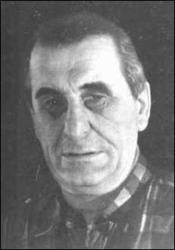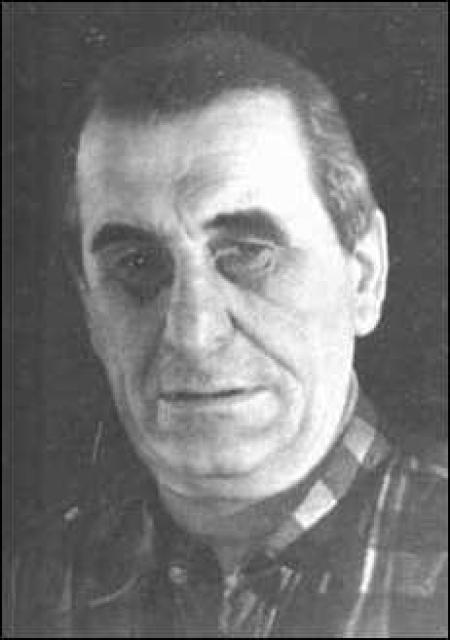
Vyacheslav Kondratiev
 Russia
Vyacheslav Kondratyev wrote about war from the point of view of the ordinary infantryman who had to endure it. His fiction returned repeatedly to the brutal fighting near Rzhev, where he had served as a young soldier in the Second World War. He did not publish his best-known work, the novella “Sashka,” until he was nearly 60, but its plainspoken portrait of fear, exhaustion, and moral courage quickly established him as an important voice of the front-line generation.
From Poltava to the Rzhev front
Kondratyev was born in Poltava on 30 October 1920, into a railway engineer’s family. The family moved to Moscow in 1922. He began studying architecture, but was drafted into the Red Army in 1939 and served in the railway troops in the Far East. After the German invasion of the Soviet Union, he volunteered for front-line service and in 1942 fought near Rzhev with the 132nd Separate Rifle Brigade.
The Rzhev battles left a lasting mark on him. He was wounded twice and was discharged with a disability in 1944, after a long hospital stay. He received the Medal “For Courage” for his service. Years later, he would return to the conditions he had known as a soldier: mud, cold, inadequate supplies, constant danger, and the emotional weight carried by men who had little time to think of themselves as heroes.
A writer’s late beginning
After the war, Kondratyev completed his studies at the Moscow Polygraphic Institute and worked for many years as a graphic artist and designer. He began writing military prose in the 1960s, drawing on personal memories and the lives of people he had served alongside. His first major work, “Sashka,” appeared in the journal Friendship of Peoples in February 1979, with an introduction by the established writer Konstantin Simonov. The story follows several days in the life of a young infantryman during the Rzhev fighting.
At the heart of “Sashka” is a difficult moral choice. The soldier captures a German prisoner and promises he will be treated according to the rules for prisoners of war. When a furious commander orders the prisoner’s execution, Sashka delays and ultimately refuses to kill an unarmed man. The scene distills Kondratyev’s central concern: how a person can hold on to compassion and a sense of right when violence and authority press in from every side.
The novella’s success opened the way for stories and works including “Leave on Account of Wounds,” “Borkin’s Roads,” and “Meetings on Sretenka.” His novel “Red Gates” and his play “The Battles Had Local Significance” also explored the war’s aftermath and the difficult return to ordinary life. Many works share characters and settings, forming what readers and critics came to call his “Rzhev prose.” Several were adapted for film and theatre, including “Sashka” in 1981.
The human scale of war
Kondratyev’s work stood apart for its attention to small, physical details and ordinary people rather than grand military spectacle. His characters face cold, hunger, fear, and contradictory orders; their courage is often quiet and bound up with looking after one another. By writing about the Rzhev front with the knowledge of a participant, he gave readers a vivid sense of the war’s human cost.
Kondratyev died in Moscow on 23 September 1993. His reputation rests above all on “Sashka” and the connected body of Rzhev stories and novellas that followed. Together, they preserve a soldier’s view of a battle remembered not only for its scale, but for the individual lives tested within it.