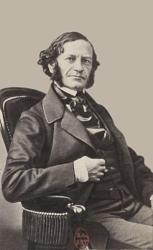
Walter Dahms
 Germany
- Early Life and Career
- Biographies and Musicological Works
- Opera Librettist
- Life Abroad and Vocal Career
- Renewed Connections and Later Works
- Musical Legacy
Early Life and Career
Born as Walter Damrosch, the German musicologist, music critic, and composer emerged on the cultural scene at the turn of the 20th century. From 1912 onwards, he published extensively as a music critic for various periodicals, including the Allgemeine Musikzeitung and newspapers in Berlin, Munich, and Bromberg.
Biographies and Musicological Works
Damrosch's literary output includes notable biographies of prominent composers: Franz Schubert (1912), Robert Schumann (1916), Felix Mendelssohn (1919), Johann Sebastian Bach (1924), and Frédéric Chopin (1924). He also published "Musik des Südens" (1923), a survey of Southern European music, and "Die Offenbarung der Musik: Eine Apotheose Friedrich Nietzsches" (1922), a polemical work on Nietzsche's influence on music.
Opera Librettist
In addition to his musicological pursuits, Damrosch briefly dabbled in opera librettos. His notable contributions include German versions of Ermanno Wolf-Ferrari's "Sly" (1927) and "Il campiello" (1931).
Life Abroad and Vocal Career
In the 1920s, Damrosch relocated to Italy, adopting the Italianized name Gualtèrio Armando. There, he immersed himself in bel canto opera and briefly attempted a career as a singer. Later, he resided in France and Spain before settling in Portugal in 1935.
Renewed Connections and Later Works
In 1958, Damrosch reestablished contact with German publishers. He published additional biographies: Niccolò Paganini (1960), Franz Liszt (1961), and Richard Wagner (1961). He also authored a "History of Portugal" (1966) and a free translation of Fernão Mendes Pinto's "Peregrinations" (1960).
Musical Legacy
Damrosch's compositional oeuvre remained largely unknown during his lifetime but has garnered attention in recent years. His overture "Spring," believed to be inspired by Sandro Botticelli's paintings, was performed by the Princeton Symphony Orchestra in 2004 under the baton of Mark Laycock.