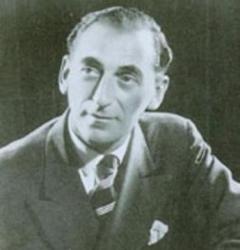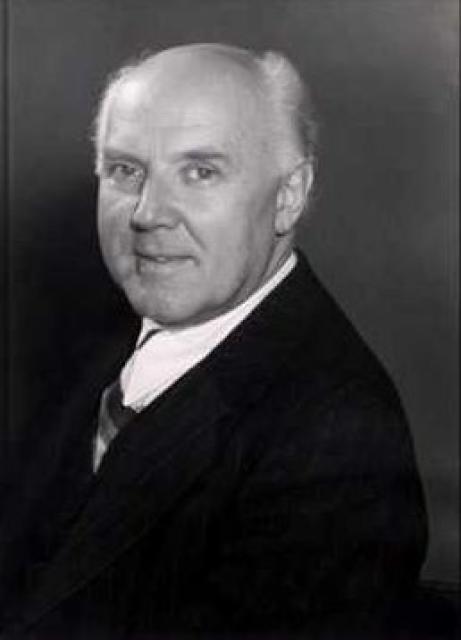
Walter Gieseking
 Germany
- Early Life and Education
- Rise to Prominence
- International Career
- Accusations and WWII
- Post-War Career and Legacy
Early Life and Education
Walter Gieseking was born on June 5, 1895, into a family of German biologists. Spending his childhood in France, Gieseking began playing the piano at the age of four. However, it was not until 1911 that he pursued formal music lessons under Karl Leimer at the Hannover Conservatory.
Rise to Prominence
In 1915, Gieseking performed the complete cycle of Beethoven's piano sonatas in Hannover. His exceptional mastery of the piano garnered critical acclaim, and five years later, he achieved international recognition with concerts in Berlin featuring the music of Debussy and Ravel, which had rarely been performed in Germany.
International Career
Gieseking's international career took off, and he premiered numerous works. In 1923, he debuted in London with Hans Pfitzner's Piano Concerto, and three years later, he played the Hindemith Concerto in the United States. In 1928, his concerts in Paris were met with great enthusiasm. Sergei Prokofiev praised Gieseking as "one of the best: Rachmaninoff, Horowitz, and himself."
Accusations and WWII
However, Gieseking's rise was interrupted by accusations of collaboration with the Nazi regime, leading to his ban from performing in the United States. He continued to tour in Europe, South America, and Japan until the end of the war.
Post-War Career and Legacy
After the war, Gieseking's ban was lifted, and he returned to the United States in 1955. At Carnegie Hall, he performed all of Claude Debussy's piano works to great acclaim. He later taught master classes at the Hochschule für Musik Saarbrücken.
Gieseking possessed an extraordinary memory, enabling him to memorize entire musical scores without even playing them. His repertoire encompassed classical to early 20th-century composers. He recorded notable anthologies of piano works by Mozart, Ravel, and Debussy. His interpretations of Impressionist composers were particularly renowned.
In addition to his musical accomplishments, Gieseking published two books with his teacher, Karl Leimer: "Modern Piano Playing According to Leimer-Gieseking" and "Rhythm, Dynamics, and Other Problems of Piano Playing According to Leimer-Gieseking." His autobiography, "So wurde ich Pianist," was released in 1963.
Walter Gieseking's legacy as a pianist lives on through his numerous recordings, which continue to inspire musicians and music lovers alike. Despite the controversies surrounding his past, his exceptional talent and artistry remain undeniable.