Walter Philip Reuther
 USA
USABiography of Walter Philip Reuther
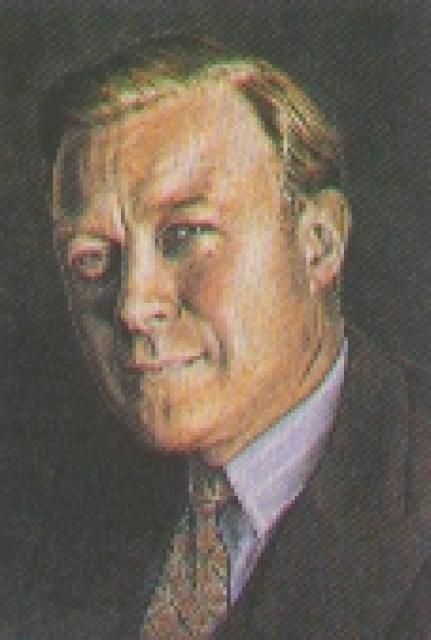
Walter Philip Reuther was a well-known labor leader who transformed the powerful United Automobile Workers (UAW) into not only the driving force of the automotive industry but also the main tool of the Democratic Party in the mid-20th century. Born on September 1, 1907, in Wheeling, West Virginia, Reuther came from a family of socialist workers who had immigrated from Germany and worked in a brewery. He maintained close relationships with his brothers, Victor Reuther and Roy Reuther, who were also his colleagues.
Early Career
Reuther began working at Ford Motor Company in 1927 as an expert in tooling and stamping. However, due to the hardships of the Great Depression, he was laid off in 1932. Although his employment record stated that he left voluntarily, Reuther claimed that he was fired because of his noticeable socialist activities. He and his brothers traveled to Europe and worked at auto plants in Gorky, Soviet Union, from 1933 to 1935. Reuther was a devoted socialist who never became a communist. Dissatisfied with the lack of political freedom in Russia, he returned to the United States and joined General Motors (GM), becoming an active member of the UAW.
Union Activism
Reuther, a member of the Socialist Party, likely paid party dues to the Communist Party for a few months in 1935-1936. In late February 1939, he was accused of participating in a Communist Party meeting on planning issues. Reuther collaborated with communists in the late 1930s during the formation of the Popular Fronts and acknowledged this during an internal UAW interrogation. Despite this, Reuther positioned himself as an anti-Stalinist socialist. He remained active in the Socialist Party and unsuccessfully ran for reelection to the Detroit Common Council in 1937. However, thanks to the efforts of President Franklin D. Roosevelt to combat inequality, Reuther eventually joined the Democrats.
As the leader of a small dissatisfied group of workers (Local 174), Reuther organized several strikes and was hospitalized in 1937 and 1940 after being severely beaten by strikebreakers. He also survived two assassination attempts, with the second occurring on April 20, 1948, resulting in the permanent loss of function in his right arm. The widely publicized clash between workers and the Ford company on May 26, 1937, received significant attention. As the chief organizer of the UAW, Reuther helped win major strikes against the recognition of GM's actions in 1940 and Ford's actions in 1941. After Japan's attack on Pearl Harbor, Reuther staunchly supported military efforts and resisted transformations that could harm ammunition production. He led a 113-day strike against GM in 1945-1946, which achieved only partial success. Reuther did not come to power or gain voting rights on the company's board, but he secured higher wages and benefits.
Leadership and Activism
In 1947, Reuther narrowly defeated R. Thomas and became the president of the UAW. He was one of the founders of the political organization Americans for Democratic Action in 1947. Reuther left the Socialist Party in 1939 and vigorously advocated for liberal interests within the Democratic Party during the 1950s and 1960s. He stood alongside Martin Luther King Jr. during his famous speech beginning with the words "I have a dream" at the 1963 March on Washington.
On May 9, 1970, Reuther, his wife May, architect Oscar Stonorov, a bodyguard, and two pilots died when their chartered Lear-Jet crashed and burned. In October 1968, a year before his fatal accident, Walter and his brother Victor narrowly escaped death in a small private plane. Many years after Walter's death, Victor gave an interview stating, "Myself and other family members are convinced that both the fatal and near-fatal crashes in 1968 were not accidental." The FBI still refuses to release a 200-page document related to Walter Reuther's death.
Reuther was listed among the "100 Most Influential People of the 20th Century" by Time magazine. In 1995, he was posthumously awarded the Presidential Medal of Freedom by President Bill Clinton.