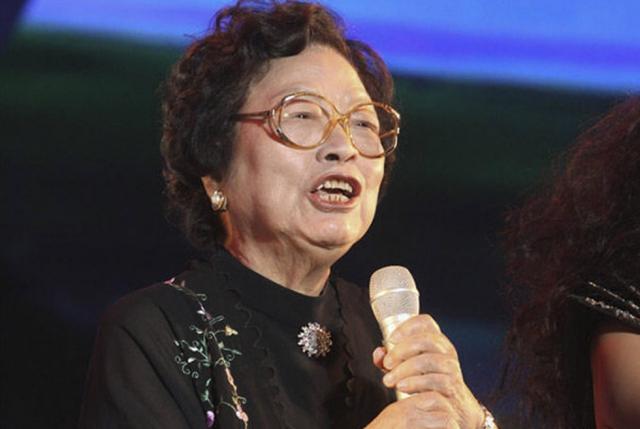
Wang Kun
 China
China- Wang Kun: A Soprano of Revolutionary Songs
- Joining the Liberation Army
- International Study and Career
- Vocal Style and Legacy
- Mentor and Inspiration
Wang Kun: A Soprano of Revolutionary Songs
Wang Kun, born in 1925, is a renowned Chinese soprano and actress specializing in revolutionary songs. Her powerful voice and captivating performances have made her an icon in the realm of patriotic music.
Joining the Liberation Army
In the 1940s, Wang Kun joined the People's Liberation Army troupe. She rose to prominence in 1945 with her leading role in the opera "The White-Haired Girl" by the Lu Xun Academy of Arts.
International Study and Career
After the Civil War, Wang Kun pursued higher music education in the Soviet Union and later at the Central Conservatory of Music in Beijing. Upon her return, she became the director of the Oriental Song and Dance Ensemble. She also held prestigious positions in the Chinese Cultural Federation and the Chinese Musicians' Association.
Vocal Style and Legacy
Wang Kun's vocal style blended traditional Chinese folk melodies with techniques inspired by Western bel canto. Her signature vibrato and bright timbre set her apart from her contemporaries. Among her most celebrated recordings are "Nanniwan" (1943), "The Joy of Emancipation," "Autumn Harvest," and "Union of Peasants."
Mentor and Inspiration
Wang Kun has nurtured a generation of Chinese singers, including Wang Chengfang, Li Linyu, and Ai Jing. In 2005, she received an invitation from the China Academy of Art. Her 70th career anniversary concert in 2009, organized by the Ministry of Culture and the Chinese Federation of Literary and Art Circles, featured performances by her students and a congratulatory letter from Premier Wen Jiabao.