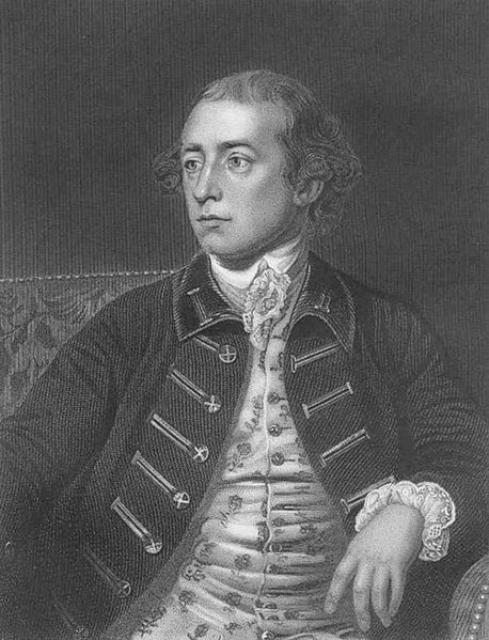
Warren Hastings
 India
India- Warren Hastings Biography
- Early Career
- Governor-General of Bengal
- The Impeachment Trial
- Later Life and Death
Warren Hastings Biography
Warren Hastings was the first Governor-General of India. He was born in Churchill, Oxfordshire on December 6, 1732. He studied at Westminster School and in 1750, he went to Calcutta to work for the East India Company.
Early Career
When Robert Clive recaptured Calcutta from Siraj-ud-Daulah in 1757 and 1758, he appointed Hastings as the English President at the court of the Nawab of Bengal. In 1761, Hastings became a member of the Council of Calcutta and strongly protested against the prevailing abuses there, which soon led to a war with the Nawab of Bengal. After the victory at Buxar in 1764, when the British gained control over Bengal, Hastings resigned and returned to England. From 1769 to 1772, he successfully served in the Madras Council.
Governor-General of Bengal
In 1772, Hastings was appointed as the Governor of Bengal and began a series of much-needed reforms, particularly in the financial sector, as the East India Company now controlled the finances of Bengal. In 1773, under the Regulating Act, Hastings became the Governor-General. Bengal was a prosperous region, and the ruler of Oudh was an ally of the company. These relations were further strengthened when Hastings sent troops against the Rohilla tribe, which had been terrorizing the population of Bengal. However, as France was at war with England, the policies of the Bombay government provoked a war with the Marathas. Hastings' quick and skillful actions saved the situation, leading to the conquest of Gujarat and Gwalior. Meanwhile, the Madras government got involved in a conflict with Nader Shah, the ruler of Mysore, and once again, Hastings' swift response, sending Sir Eyre Coote to command the military operations in Madras, brought victory.
The Impeachment Trial
All these endeavors required money, and to cover the expenses, Hastings compelled the rebellious Raja of Benares to pay additional sums to the East India Company. He also forced the Begum of Oudh, who was involved in the rebellion, to part with a portion of her immense wealth. In 1784, the India Act was passed, transferring the company's possessions under the control of the Crown. As a result, Hastings resigned and returned to England. His long-standing enemy, Philip Francis, who had become a Member of Parliament, brought charges against Hastings, and with the support of Edmund Burke, rallied the Whig party against him. The government ministers joined the fight, using the case against Hastings as a weapon against the East India Company. The trial lasted for seven years, from 1788 to 1795, and ended with Hastings being acquitted of all charges.
Later Life and Death
In his later years, Warren Hastings lived in Daylesford and passed away on August 22, 1881.


