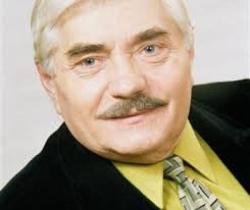
Wayland Rudd
 USA
USA- The Life and Legacy of Weyland Rodd Sr., an American-Soviet Actor
- A Journey to Moscow
- Theatrical Triumphs
- Cinematic Debut
- Soviet Film and Social Activism
- Personal Life
- Legacy and Influence
The Life and Legacy of Weyland Rodd Sr., an American-Soviet Actor
Childhood and EducationWeyland Rodd Sr. was born on January 8, 1900, in Lincoln, Nebraska. After graduating high school, he attended Howard University, a leading historically Black university. His education and early experience as an insurance agent honed his communication skills and stage presence.
A Journey to Moscow
In 1932, Rodd visited Moscow as part of a delegation of Black actors hired for the film "Black and White." Despite his successful career in the US, he faced persistent racial prejudice. In the USSR, he saw the potential for a life free from racism and social acceptance of his achievements.
Theatrical Triumphs
Rodd debuted in theater in the US, performing at the Hedgerow Theatre in Pennsylvania. As an African-American, he portrayed lead roles in "Emperor Jones" and "Othello." Arriving in the USSR, he graced the stages of the Vsevolod Meyerhold Theater and the Konstantin Stanislavsky Theater. Notable performances included "Procession," "The List of Blessings," and "Deep Roots." Rodd also wrote several plays, including "Andy Jones" based on Angelo Herndon's autobiography.
Cinematic Debut
Rodd's film debut came in 1933's "The Great Consoler." As a black inmate, his performance impressed director Lev Kuleshov. Rodd sought to portray renowned poets like Pushkin, earning praise for his exceptional rhythm, acting abilities, and emotional depth.
Soviet Film and Social Activism
While in the USSR, Rodd acted in several notable films, often portraying uneducated Black American characters. These roles aimed to elicit pity and denounce racism, highlighting the plight of Black Americans. Prominent works included "Tom Sawyer," "The Fifteen-Year Captain," and "Miklukho-Maclay."
Personal Life
Weyland Rodd Sr. married Lorita Marksiti, a Serbian-American pianist. They had a daughter, Victoria, in 1945, and a son, Weyland Jr., in 1946. After their father's passing, Lorita and Victoria left the USSR for the US, while Weyland Jr. remained in his Soviet homeland.
Legacy and Influence
Weyland Rodd Sr.'s career as an American-Soviet actor paved the way for diverse representation and the promotion of racial equality. He left an imprint on both the theatrical and cinematic landscapes of both nations, inspiring future generations of actors and activists.