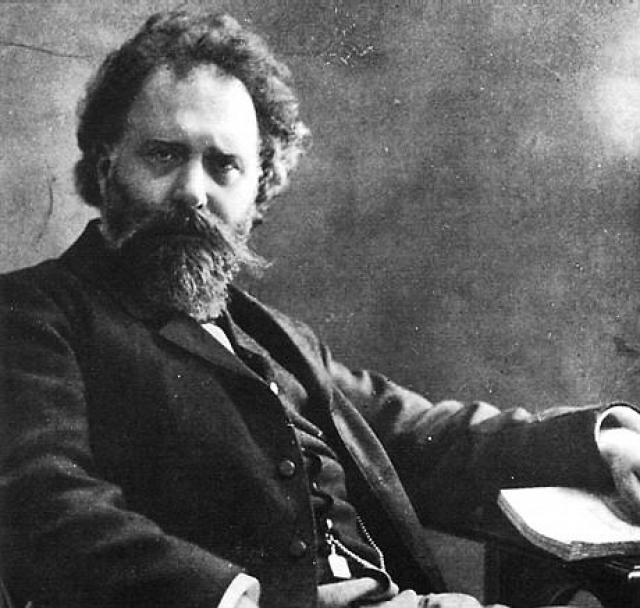
Wilhelm Kienzl
 Austria
- Hans Pfitzner: A Viennese Master of Opera and Song
- Influential Teachers
- Operatic Success
- Master of Lieder
- Musicological Contributions
Hans Pfitzner: A Viennese Master of Opera and Song
Early Life and EducationBorn in Moscow but raised in Graz, Austria, Hans Pfitzner began his musical journey at a young age. Under the guidance of local teachers, he mastered the violin, piano, and composition. Continuing his studies at the conservatories of Prague and Leipzig, Pfitzner also pursued a doctorate in musicology at the University of Vienna.
Influential Teachers
Pfitzner's education was enriched by a diverse group of mentors, including Eduard Hanslick, Franz Liszt, and Josef Krejci. Krejci introduced him to the music of Richard Wagner, a profound influence that shaped Pfitzner's understanding of opera.
Operatic Success
Pfitzner excelled as an opera composer, with "Der Evangelimann" (1895) emerging as his most renowned work. Other operas include "Urvasi" (1886), "Heilmar der Narr" (1892), "Don Quixote" (1898), and "Der Kuhreigen" (1911).
Master of Lieder
Along with Hugo Wolf, Pfitzner is celebrated as one of the most significant composers of Lieder since Schubert. His vocal repertoire includes a wide range of works, notably the first national anthem of Austria (used until 1929).
Musicological Contributions
Pfitzner's musicological writings left a lasting impact. He penned the biography "Wagner" (1904), the treatise "Die musikalische Declamation," and numerous articles that illuminated the art of music.