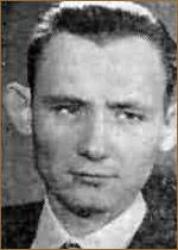
Ray Barretto
 USA
USA- Early Life and Influences
- Military Service and Musical Awakening
- Professional Career
- Solo Career and Charanga Success
- Shift to Rhythm and Blues
- Grammy Award and Later Years
- Death and Legacy
Early Life and Influences
Born in Brooklyn, New York, to Puerto Rican parents, Ray Barretto's birth name was wrongly recorded with an extra "T" due to a transcription error. Barretto's childhood was spent in the Latino ghettos of Spanish Harlem and the Bronx. Inspired by his mother's love of music, Barretto developed a passion for jazz greats like Duke Ellington and Count Basie.
Military Service and Musical Awakening
Barretto was drafted into the army in 1946 at age 17. While stationed in Germany, he encountered Belgian vibraphonist Fats Sadi, who influenced his musical journey. However, it was Dizzy Gillespie's "Manteca," featuring Afro-Cuban percussionist Chano Pozo, that solidified Barretto's decision to pursue music as a career.
Professional Career
Upon his return from military service, Barretto immersed himself in New York's jazz scene. He joined Eddie Bonnemere's Latin Jazz Combo before being invited by Charlie Parker to perform in his ensemble. After a stint with pianist José Curbelo, Barretto joined Tito Puente's orchestra in 1957, playing on the celebrated album "Dance Mania."
Solo Career and Charanga Success
Barretto became a sought-after session musician in the 1960s. In 1961, he formed his own charanga orchestra, releasing "Pachanga with Barretto." The album "Latino!" (1962) and "Charanga Moderna" (1962) brought him major success. The latter featured the hit song "El Watusi," which became the first Latin track to reach the top 20 of the Billboard chart.
Shift to Rhythm and Blues
In 1967, Barretto signed with Fania Records and transformed his orchestra's sound. Violins were replaced by brass instruments, and the music shifted towards rhythm and blues. The album "Acid" showcased this stylistic evolution and was met with positive reception.
Grammy Award and Later Years
Over the next decade, Barretto released a string of hit albums on Fania. In 1990, he finally won a Grammy Award for "Ritmo en el Corazón" with Celia Cruz. In 1999, he was inducted into the International Latin Music Hall of Fame.
Death and Legacy
Barretto continued to produce music and tour until his death in 2006 from heart failure. He was honored in Puerto Rico before his body was cremated. Ray Barretto is widely regarded as the godfather of Latin jazz, a pioneer who fused Latin rhythms with jazz improvisation, and a legend in the history of Afro-Caribbean music.