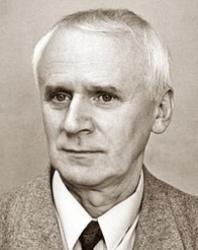
Willem Kes
 Netherlands
- Willem Kes: A Maestro of the Music World
- Early Training and Influences
- Orchestral Leadership
- International Acclaim
- A Legacy of Innovation
- Later Career and Compositions
Willem Kes: A Maestro of the Music World
Born to a Dutch merchant in 1856, Willem Kes emerged as an exceptional conductor and violinist. His musical journey began at age seven when he received violin lessons from a local musician.
Early Training and Influences
Kes's talent was recognized by Ferdinand Böhme, the town bandmaster, who encouraged him to pursue advanced studies at the Leipzig Conservatory in 1871. There, he honed his violin skills under Ferdinand David and studied composition with Karl Reinecke. Through a scholarship from King Willem III, he furthered his education in Brussels with Henri Vieuxtemps and in Berlin with Joseph Joachim.
Orchestral Leadership
In 1876, Kes joined the orchestra in Dordrecht as a violinist. By 1883, he had made his debut as a conductor at the popular concerts in Amsterdam's city park. In 1888, he founded and directed the Concertgebouw Orchestra, a renowned ensemble that became known for its precision and discipline. Under Kes's leadership, the orchestra welcomed renowned soloists like Pablo Sarasate and Eugen d'Albert.
International Acclaim
Vincent d'Indy's 1893 review praised Kes's orchestra as "the best I have heard outside of Paris." From 1895 to 1898, Kes served as Principal Conductor of the National Scottish Orchestra. In 1898, he moved to Moscow, where he led the orchestra of the Moscow Philharmonic Society and later became the director of the society's music school.
A Legacy of Innovation
During his tenure in Moscow, Kes played a pivotal role in introducing the music of Richard Wagner to Russian audiences. He conducted performances of "Die Walküre" and "Siegfried" at the Bolshoi Theatre in 1902 and presented excerpts from "Die Meistersinger von Nürnberg" and "Tristan und Isolde" in 1904, which were met with enthusiastic acclaim.
Later Career and Compositions
After a brief stint in Dresden, Kes served as director of the Koblenz Conservatory from 1905 to 1926. Throughout his career, Kes composed several works, including a symphony, a violin concerto, a cello concerto, overtures, and chamber music.