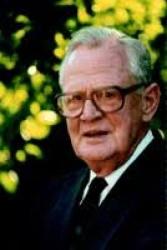
William A. Gahl
 USA
USABiography of William A. Gahl
William A. Gahl, M.D., is a doctor of medical sciences and the director of the National Institutes of Health (NIH) National Human Genome Research Institute (NHGRI). He is known for his research on rare inherited metabolic disorders. Dr. Gahl conducts his research by observing patients in the hospital and performing biochemical, molecular biology, and other cellular level studies in his laboratory.
Education
William Gahl graduated from the Massachusetts Institute of Technology (MIT) with a Bachelor's degree in 1972. He then obtained his Doctor of Medicine degree from the University of Wisconsin-Madison in 1976 and defended his doctoral dissertation in 1981.

Research on Rare Inherited Metabolic Disorders
Dr. Gahl's research focuses on a range of genetic disorders, including cystinosis, Hermansky-Pudlak syndrome (HPS), alkaptonuria, and problems with excess or deficiency of sialic acids. He has been particularly interested in studying the mechanism of cystine efflux from lysosomes. Lysosomal storage disorders are caused by mutations in the CTNS gene, which affects approximately one in every 100,000 to 200,000 newborns. The CTNS gene encodes cystinosin, an integral membrane protein of lysosomes. Mutations in CTNS lead to impaired cystine transport out of lysosomes and the formation of cystine crystals in most cells of the body. Without treatment, cystinosis can cause kidney failure in childhood and various other serious complications. Through his decades of research, Dr. Gahl has gained insights into the pathogenesis of the disease and demonstrated the safety of cysteamine therapy, which depletes cystine from cells. Cysteamine therapy, along with kidney transplantation, has greatly improved the condition of many patients, allowing them to manage the symptoms of cystinosis.
Another important area of Dr. Gahl's research is Hermansky-Pudlak syndrome (HPS), a disorder characterized by albinism and bleeding. In some cases, HPS is also associated with pulmonary fibrosis or colitis. Since its first description in 1959, seven human genes responsible for the manifestation of the syndrome have been identified, two of which were discovered by Dr. Gahl's group. However, some patients with HPS do not have identifiable genetic mutations, suggesting the existence of additional genes. Although the treatment methods for the underlying disorder have not yet been developed, Dr. Gahl's group has achieved success in slowing down the progression of certain HPS symptoms in a small group of patients.
Dr. Gahl's laboratory also studies alkaptonuria, a disorder caused by mutations in the HGO gene, resulting in the accumulation of homogentisic acid (HGA). This acid causes discoloration of the eyes and damages connective tissues in large joints and heart valves. Through careful observation of 58 patients, Dr. Gahl's group has revealed the first modern characterization of the disease and developed a potential therapy using low-dose nitisinone, which reduces HGA production. The next step, a three-year clinical trial, will determine whether the drug can slow down or halt the progression of alkaptonuria-related damage.
Additionally, Dr. Gahl and his reference laboratory study sialic acids. A deficiency of sialic acid causes a severe muscle disorder that often leads to wheelchair confinement and ultimately death from respiratory failure. An excess of sialic acid is equally detrimental to human health. Three rare childhood disorders, characterized by growth retardation and developmental delay, are associated with excessive sialic acid levels in the body. One of these diseases is so rare that only seven patients have been identified worldwide, with mutations in six of them detected in Dr. Gahl's laboratory. Moreover, Dr. Gahl's group has developed phenotypic descriptions of various disorders and provides diagnostic assistance to other laboratories.
Dr. Gahl's laboratory also investigates other genetic disorders, including autosomal recessive polycystic kidney disease, congenital liver fibrosis, Chediak-Higashi syndrome, gray platelet syndrome, Hutchinson-Gilford progeria, and others.