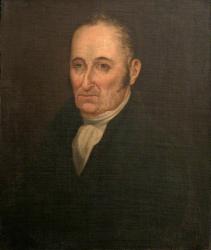
William Bickford
 Great Britain
William Bickford was an English inventor and leather worker whose safety fuse transformed the way miners set off explosive charges. Developed in Cornwall’s mining district, his design gave workers a more predictable interval between lighting a fuse and the blast. The invention became known by his name and was adopted in mining and other industries that relied on explosives.
From Devon to Cornwall
Bickford was baptized in Ashburton, Devon, in 1774. He trained and worked as a currier, treating and finishing leather, and later ran a leather business in Tuckingmill near Camborne, in Cornwall. The surrounding region depended heavily on mining, where blasting was dangerous and the fuses then in use could burn irregularly or ignite a charge prematurely.
The safety fuse
Around 1830, Bickford began considering how to make blasting safer. A commonly told account says that he watched a local rope maker twisting strands together and saw that a similar process could encase a line of gunpowder. His fuse placed a continuous powder core inside braided yarn, which was then bound and treated with a protective coating. Miners could cut a length to estimate how long they had to reach safety before the charge ignited.
Bickford patented his “Miner’s Safety Fuse” on September 6, 1831. The new construction provided a more controlled burn than earlier methods and reduced the risk of a sudden flash reaching the explosive charge. It became an important safety improvement in mines and quarries, where controlled blasting was central to extracting ore and shaping rock.
Commercial legacy
The fuse’s success came from its practical design: it was flexible, could be made in long lengths and allowed the user to judge the delay by the piece cut. Bickford’s successors developed manufacturing operations in Cornwall and eventually supplied mining regions around the world. The safety fuse helped establish a new standard for initiating blasts, even as later technologies replaced it in many applications.
Bickford died in 1834, only a few years after securing the patent. His name endured in the term “Bickford fuse,” a reminder of how an observation from everyday craft work led to a widely adopted industrial invention.