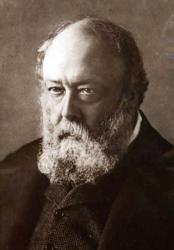
William Carey
 Great Britain
- Early Life and Education
- Missionary Calling
- Founding the Baptist Missionary Society
- Arrival in India
- Professor and Linguist
- Literary and Scientific Contributions
- Social Activism
- Later Years and Legacy
Early Life and Education
William Carey was born on August 17, 1761, in Paulerspury, Northamptonshire, England. The eldest child of Edmund and Elizabeth Carey, a weaver, he exhibited a precocious interest in science and languages. At the age of 14, he became an apprentice to a shoemaker in the nearby village of Hackleton, where he converted to the Congregationalist faith.
Missionary Calling
Despite his trade, Carey continued to pursue his studies in foreign languages, including French, Greek, and Hebrew. On October 5, 1783, he was baptized into the Particular Baptist Church and in 1785 became a schoolmaster in the neighboring village of Moulton. There, he embraced the cause of missions to pagans, inspired by the biographies of American missionaries David Brainerd and Jonathan Edwards.
Founding the Baptist Missionary Society
In 1789, Carey became pastor in Leicester. In 1795, he published his groundbreaking pamphlet "An Enquiry into the Obligations of Christians to Use Means for the Conversion of the Heathens," which provided a theological basis for missions beyond Europe. The same year, he co-founded the Particular Baptist Society for Propagating the Gospel among the Heathen, known as the Baptist Missionary Society.
Arrival in India
In November 1793, Carey arrived in Calcutta after raising funds for his mission. He initially worked as a manager on an indigo plantation while translating the New Testament into Bengali, which he completed by 1801.
Professor and Linguist
In 1799, the Governor-General of India established the Fort William College in Calcutta to train civil servants. Carey was appointed professor of Bengali. In this role, he expanded his study of Sanskrit and translated the Bible into that language. He also authored Bengali and Sanskrit grammars for British learners.
Literary and Scientific Contributions
Carey's mission's printing press produced a wide range of literature. By the end of his work in India, he had published 44 translations of the Bible and its parts into various languages and dialects. He also published dictionaries, linguistic reference works, and collaborated with the botanist Nathaniel Wallich on the botanical treatise "Flora Indica."
Social Activism
Using his influence with the Governor-General, Carey advocated for the abolition of child sacrifice and the practice of sati. An opponent of the caste system, he encouraged marriages between converted Hindus without regard to caste.
Later Years and Legacy
Carey died in Serampore, India, on June 9, 1834. His pioneering work had a profound impact on the missionary movement and helped lay the foundation for modern missions. Known as the "Father of Modern Missions," William Carey remains an influential figure in Christian history.