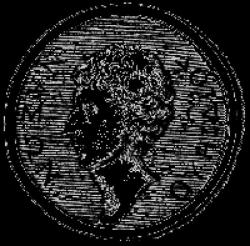
William Cowper
 Great Britain
Biography of William Cowper
William Cowper was born on November 26, 1731, in Great Berkhamsted, Hertfordshire, England, into a family of a clergyman. After his mother's death when he was six years old, he attended local schools, and at the age of ten, he was sent to Westminster School in London, where he completed his formal education in 1749. From 1749 to 1763, while living in the Temple area of London and sporadically studying law, he continued to pursue his interest in ancient, French, Italian, and English literature.
Mental Health Struggles
In 1763, Cowper experienced his first severe bout of madness. Throughout his life, he suffered from episodes of melancholy and depression, often attempting to take his own life. The darkness and horror of his life and work were balanced by a delicate sense of humor and moments of bright joy. These qualities, along with the lightness and harmonious simplicity of his prose, undoubtedly place him among the great masters of the epistolary genre in English literature.
Poetic Works and Legacy
Cowper's major poetic publications include the collections "Olney Hymns" (1779) and "Poems" (1782), as well as the blank verse poem "The Task" (1785), consisting of 5200 lines. He also produced translations of "The Iliad" and "The Odyssey" (1791). During his lifetime and the first third of the 19th century, Cowper was considered the greatest poet of his generation, particularly due to his love for animals and nature, as well as his humor, piety, and tender sensitivity.
In "The Task," he combined all of these qualities with satire and didacticism, creating a work that became a model of didactic poetry for several generations. Cowper's poetry is characterized by subdued, intimate, and deeply personal tones. In satire, he tends towards generalization and morality.
Later Life and Death
After leaving the Temple, Cowper was admitted to a private psychiatric institution in 1763. From 1765 to 1767, he lived in Huntingdon, and then from 1767 to 1795, he resided in Olney, always under the care of friends. In 1795, he moved to Norfolk, where he passed away on April 25, 1800.