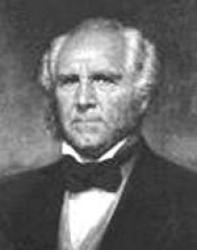
William Harrison
 USA
USABiographical Information on William Harrison
William Harrison, the 9th President of the United States, was born on February 9, 1773, in Berkeley Plantation in Charles City County, Virginia. He came from a well-known Virginian family. Harrison received his early education at home and continued his studies at Hampden-Sydney College.
Military Service
In 1790, Harrison traveled to Philadelphia to study medicine under the guidance of Dr. Benjamin Rush. However, after the death of his father, he left medical studies and joined the military. He was sent to Fort Washington (now Cincinnati, Ohio), where he served under General Anthony Wayne and participated in the war against Native Americans. The war ended in 1794 with the famous "Battle of Fallen Timbers."
Political Career
After returning to Fort Washington, Harrison got married. In 1798, he resigned from the military with the rank of captain and settled in North Bend, Ohio. With the help of his father-in-law, he was appointed Secretary of the Northwest Territory and a year later was elected as the territory's first delegate in Congress. Harrison drafted the land law of 1800, which allowed the sale of small plots of government land and provided a four-year credit to low-income buyers. He also advocated for the division of the Northwest Territory into the states of Ohio and Indiana. In 1800, he was appointed the governor of the Indiana Territory and remained in this position for 12 years.
As the author of the land law that promoted log cabin construction, Harrison initially enjoyed widespread popularity. However, his main challenge as governor was managing relations with the Native Americans. While he had the authority to settle new territories, he also had to maintain peace. These goals were often conflicting. Tecumseh and his brother organized an Indian confederacy to stop the advancement of white settlers. Tecumseh rejected Harrison's 1809 treaty, which required the Native Americans to give up land along the Wabash River, and convinced them not to leave their land. In October 1811, Harrison captured a village near the Tippecanoe River, driving out the Native Americans but suffering heavy losses. Convinced that the Native Americans were incited by the British, he supported Henry Clay's demand for a war against Britain.
In the early stages of the War of 1812, Harrison led Kentucky militiamen and successfully recaptured Fort Wayne. He was later appointed as the commander of the Northwest Army. After several unsuccessful attempts, he seized Detroit on September 29, 1813. A month later, in the Battle of the Thames, he defeated General Procter and his Native American allies, eliminating the threat of a British invasion in the Northwest Territory. However, his subsequent campaigns in Canada were unsuccessful, and Harrison resigned. In 1816, he was elected to the House of Representatives (representing Ohio), where he supported Henry Clay's political agenda. He was also elected to the Ohio State Senate in 1819 and to the United States Senate in 1824.
After resigning from the Senate in 1828, Harrison accepted an appointment as an envoy to Colombia. He was recalled in 1829 and returned to his farm in North Bend, where he lived until his candidacy for the presidency in 1836, supported by the Anti-Masonic and Whig parties. Although Harrison was one of the anti-Jacksonian candidates, he unexpectedly received 73 electoral votes, making him a potential candidate in 1840. After Daniel Webster withdrew his candidacy, the Whig party chose Harrison as their candidate, running alongside John Tyler from Virginia. During the election campaign, Harrison and the Whigs did not present a clear political platform but focused their energy on criticizing Martin Van Buren. With the catchy slogan "Tippecanoe and Tyler Too," Harrison, nicknamed the "Log Cabin and Hard Cider" candidate, easily won the election with 234 electoral votes to Van Buren's 60.
After his inauguration on March 4, 1841, Harrison appointed Daniel Webster as Secretary of State, formed his cabinet, and called a special session of Congress to pass the economic legislation initiated by the Whigs. However, just a month into his presidency, Harrison fell ill with pneumonia and died on April 4, 1841.